Liderazgo cívico
Together RI 2026: A Recap
Together RI brings neighbors together to talk, listen, and take action on the issues that matter most.
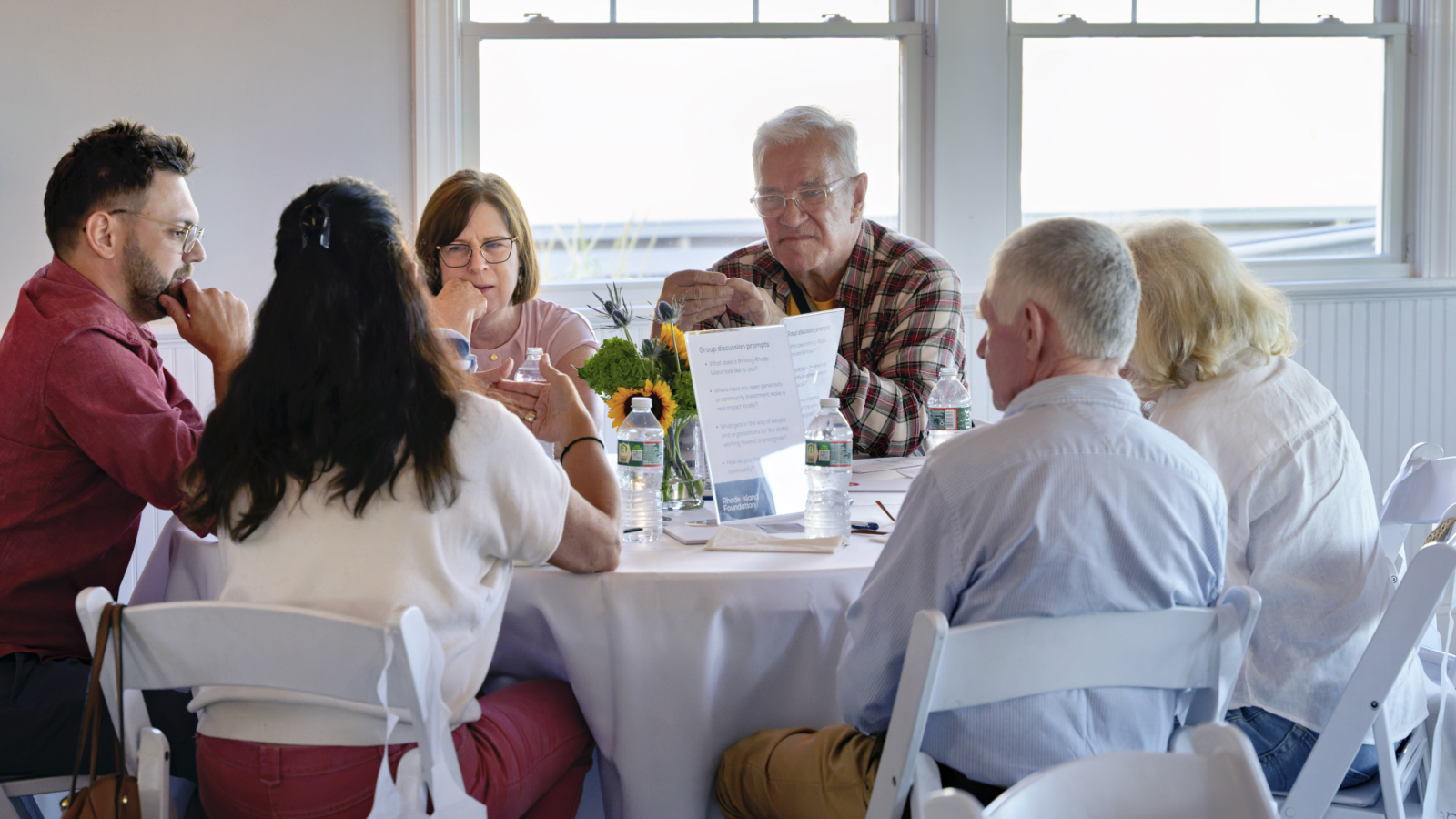
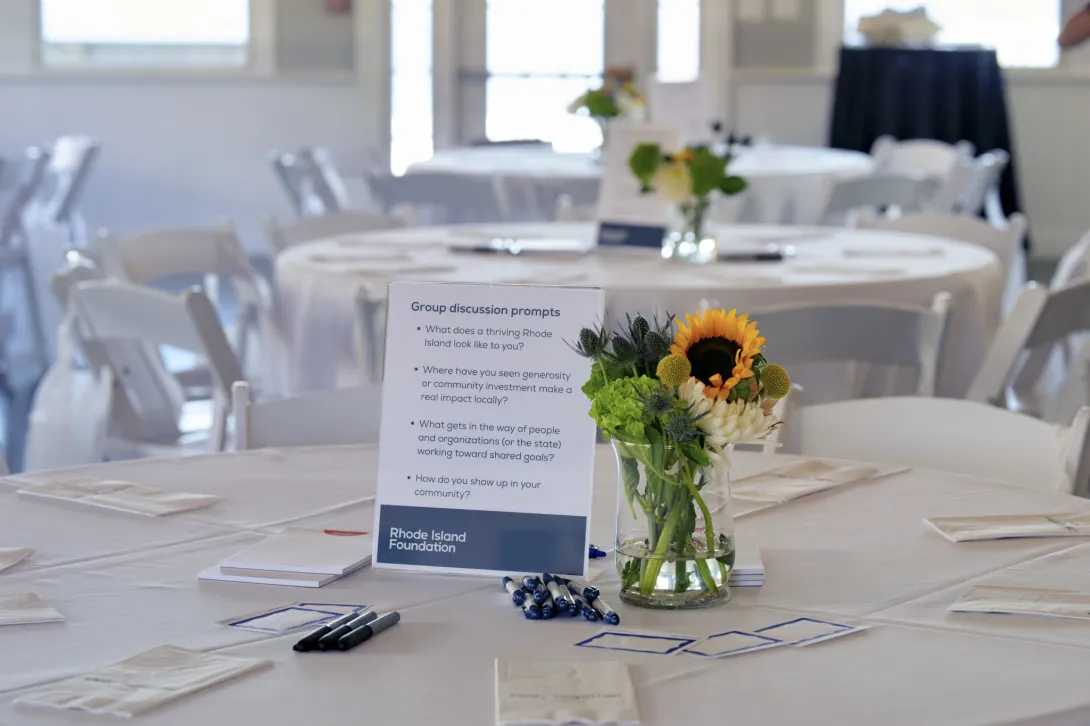
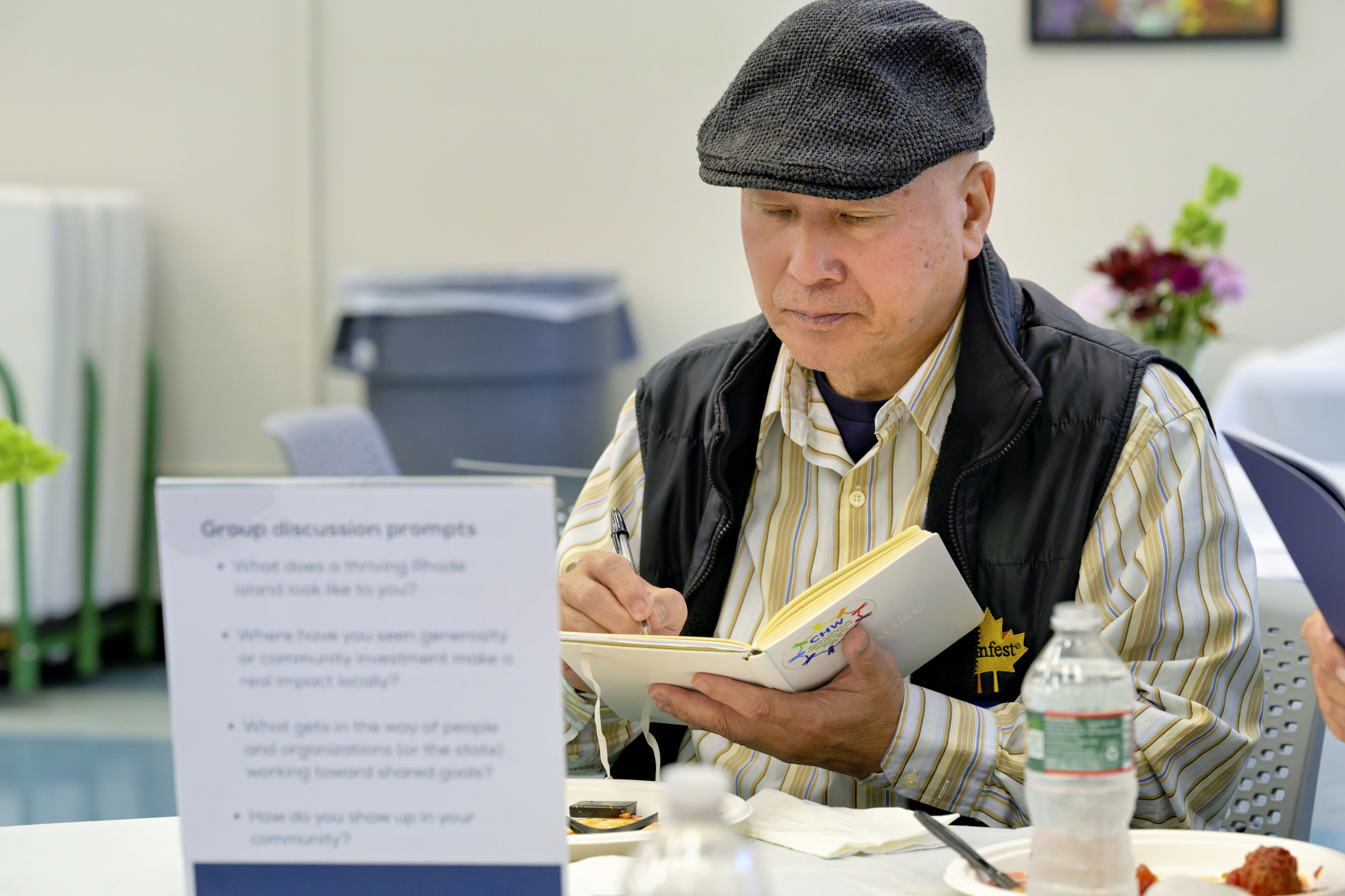
Over the past several months, people from across Rhode Island came together in Newport, Woonsocket, Narragansett, and East Providence over a family-style meal and to talk face-to-face about what matters to them, the challenges they see in their communities and opportunities to make a difference. This summary is framed around the four questions that residents discussed:
- What does a thriving Rhode Island look like to you?
- Where have you seen generosity or community investment make a real impact locally?
- What gets in the way of people and organizations (or the state) working together toward shared goals?
- How do you show up in your community?
Each section below lists the recurring themes, roughly in order of how often they came up, and then tells the story of what we heard.
Question 1: What does a thriving Rhode Island look like to you?
A thriving Rhode Island starts with housing people can afford and neighborhoods they want to live in. Around that, attendees named basic needs, good schools, ways to get around, and a real sense of belonging.
Recurring themes:
- Housing people can afford and want to live in. The most common answer, including middle-income housing, options for different incomes, and keeping young people and families here.
- Basic needs met for everyone. Food, healthcare, childcare, safe shelter, a job that pays a living wage, and no one hungry or unhoused.
- Transportation and accessibility. Reliable public transit, light rail, sidewalks, free or easier ways to get around, and universal design.
- Education and opportunity. Better schools and facilities, higher teacher pay, education without crushing debt, trades and workforce training, and support for people with disabilities.
- Belonging and neighborly connection. Block parties, town squares, less isolation since COVID, and spaces to meet people with different views without judgment.
- A voice, fairness, and accountability. Equal say in decisions, representation, rules that apply to everyone, and leaders willing to step up.
- A bold, shared vision. Planning intentionally, imagining the future, and not settling for a mediocre goal.
- A vibrant, healthy place. Lively downtowns, local businesses, arts and culture, clean air and water, ocean access, and preserving the state's beauty.
The story we heard:
When participants pictured a thriving Rhode Island, they started close to home. People asked whether they, their children, and their neighbors have a shot at a career and a place to live on the island, or in the state they love. Housing came up again and again, with a pointed question underneath it: what counts as "affordable," and for whom? Tables talked about middle-income housing, the pressure of short-term rentals and absentee owners, and how zoning decisions made over time shaped today's costs.
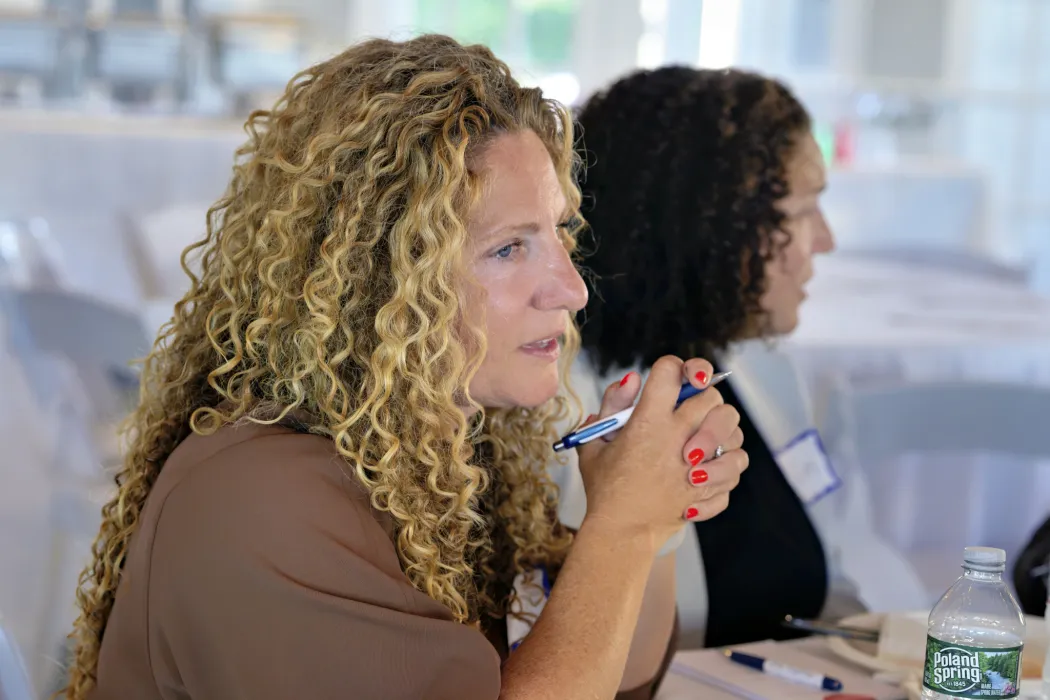
Beneath housing sat the basics. Food, healthcare, childcare, safe shelter, and a job that pays enough were named as the foundation. Without them, people said, it is hard to build anything else. Getting around mattered just as much, from reliable public transit and light rail to sidewalks and free options for teenagers and others who cannot or do not want to drive. Schools, teacher pay, trades, and arts opportunities for young people rounded out a picture of a state that helps people grow.
The second thread was less about services and more about how we treat each other. People described neighborhoods that stay neighborly, where block parties and town squares bring people together and where those with different views can talk without judgment. Several tables linked thriving to trust: trust in each other, in the organizations that serve communities, and in leaders. They asked for equal say in decisions and for rules that apply to everyone, and they called for leaders who step up rather than only voicing grievances.
Finally, people asked for ambition. One table observed that it is hard to aim for a mediocre vision. Others talked about intentional planning and a bold, shared picture of the future that lets young people imagine staying. Smaller ideas added texture, including a library of things, online safeguards for children, a cybersecurity or technology center to draw young people, and clear indicators such as full employment and school attendance. One group put it simply: a thriving Woonsocket means a thriving Rhode Island.
Question 2: Where have you seen generosity or community investment make a real impact locally?
People pointed to food banks and volunteers, arts and culture, housing, schools, and the way Rhode Islanders pull together in a crisis.
Recurring themes:
- Food banks, pantries, and the volunteers behind them. The most frequent answer, praised as a remarkable success and also a sign of how great the need is.
- Arts, culture, and community events. Public art, park concerts, festivals, WaterFire, free and open events, and cultural institutions that build pride.
- Housing and shelter work. Community development corporations, nonprofits connecting residents with housing like Habitat for Humanity and Newport's Housing Hotline, and volunteers who drove unhoused neighbors to warm places to sleep.
- Schools, scholarships, libraries, and youth programs. New school buildings, scholarships, sailing and mentoring programs, and libraries as steady community anchors.
- Faith groups, nonprofits, funders, and businesses working together. Partnerships among churches, community organizations, municipalities, philanthropy, and corporate partners.
- Rhode Island in a crisis. Neighbors and organizations coming together quickly, as in the recent SNAP disruption, and the advantage of a small state where people know each other.
- Everyday generosity. Locals giving time, money, and creativity; small shops that give back; vigils; and simple kindness.
- Caution: it is hard to sustain. Some groups are still rebuilding since COVID, bureaucracy can undo good work, and stories are often told without following up on what happened.
The story we heard:
Generosity in Rhode Island looks, first of all, like food. Table after table named food banks and pantries, often run by churches and powered by volunteers. People were impressed by how energetic that volunteer spirit is, and some noted the other side of that success: the need behind it is large. One table observed that conversations about generosity centered almost entirely on food, which says something about where people see the greatest pressure.
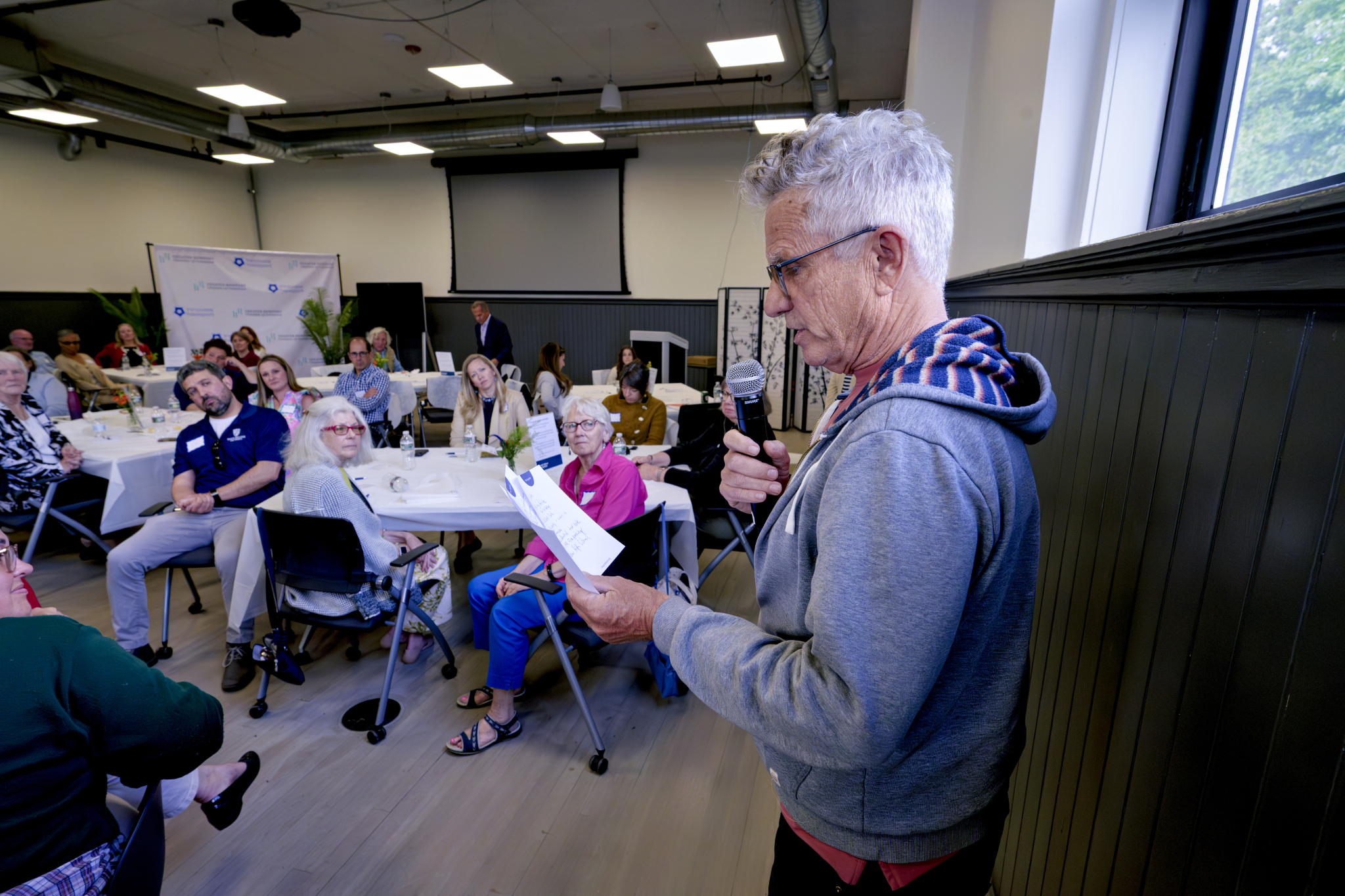
Beyond food, people described investment that shapes how a place feels. Public art, park concerts, festivals, and free community events were credited with creating pride and giving people reasons to come together. Others named housing and shelter work, from community development corporations building homes for a range of incomes to volunteers who drove unhoused neighbors to churches for a safe night. Scholarships, new schools, libraries, and programs that teach young people responsibility were held up as investments in the future workforce and in kids themselves. Several tables also noted that small, locally owned businesses are often among the most generous, perhaps because they understand their community and their place in it.
What made these efforts work, tables said, was partnership and scale. Faith groups, nonprofits, municipalities, funders, and residents came together around a recent crisis in a way some had not seen since COVID. Because Rhode Island is small, people can coordinate quickly and know who to call. Rhode Islanders were described as creative problem-solvers who are good in a crisis.
The cautions were just as clear. Intensity is hard to sustain when resources are limited and needs are great. Some organizations have not fully re-established programs they ran before COVID. Living in poverty carries a heavy mental and physical load, and one more form or hurdle can undo progress. People also asked for follow-through: stories get covered, but few return to the community to see how things turned out.
Question 3: What gets in the way of people and organizations (or the state) working together toward shared goals?
Funding and communication led the list of barriers, followed by silos, bureaucracy, mistrust, and the everyday strain of cost of living and limited time.
Recurring themes:
- Funding that is scarce, short-term, or competitive. Competition for dollars, restricted grants, yearly budget fights, and less corporate social responsibility than before.
- Communication, listening, and transparency. Councils that change things without talking to residents, voices not heard, and a gap between people in power and lived experience.
- Silos and fragmentation. Nonprofits working separately, 39 cities and towns with their own - often redundant - services, and misaligned priorities across a small state.
- Bureaucracy, politics, and accountability. Red tape, political favors, leaders who do not change course despite community input, and services or events that disappear without explanation.
- Mistrust, division, and fixed mindsets. Polarization, egos, prejudice, NIMBY reactions, and fear of judgment.
- Economic strain and limited capacity. Cost of living, poverty and disparity, time constraints, absentee owners, an aging population, and the difficulty of middle-income families staying.
- Practical access. Unreliable transportation, car dependency, missing sidewalks, and not knowing what resources exist.
The story we heard:
Tables most often pointed to money, and not only the amount. They described a funding landscape that makes collaboration hard: nonprofits compete for the same private and public dollars, grants come with restrictions, and budgets are fought over every fiscal year. People asked for more unrestricted funding and for funders to trust the organizations they support, so groups can respond quickly and plan for the long term. They also noted that money is not everything, and that institutional knowledge is easily lost when staff and volunteers come and go.
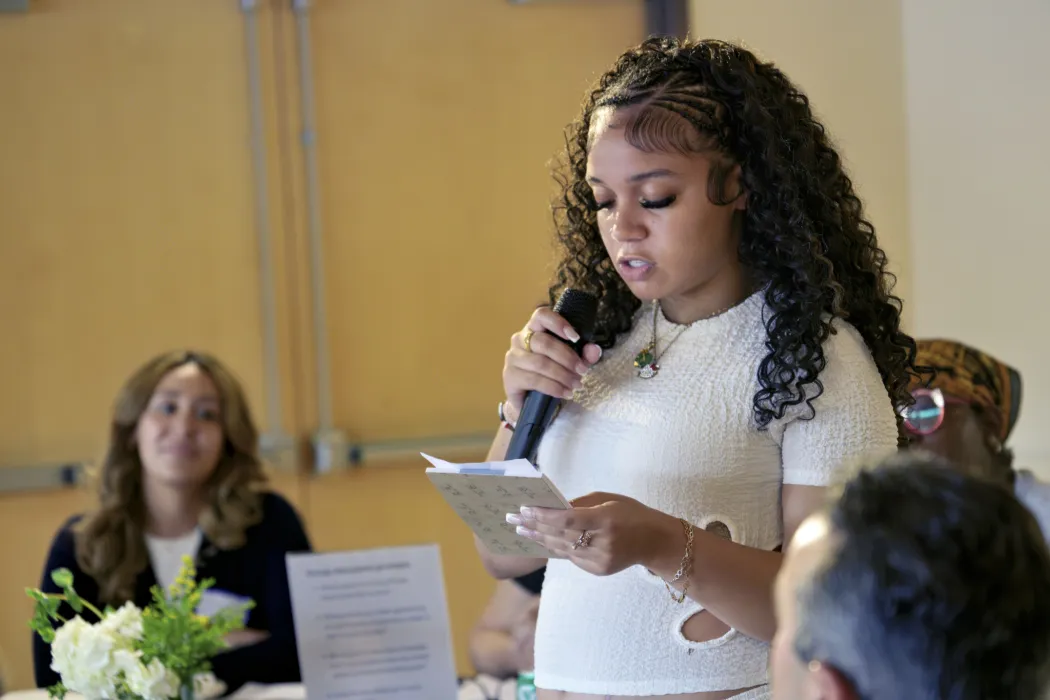
Communication was nearly as common. Residents said local decisions about development and services are often made without them, and that those in power do not always listen or explain. Some said that no matter how much the community shows up, minds do not change. Others noted that when something is not understood or shared openly, working together becomes impossible. Several people saw mistrust and misunderstanding as the root of stalled progress, and said real change needs work that starts from the ground up.
Structure came up as well. In a small state with many separate towns and a robust nonprofit sector, people noted siloed organizations, duplicated services, and competition where cooperation could be possible. Tables raised the idea of consolidation, and asked how organizations might merge or collaborate. Alongside these, people named differences in priorities, polarization, egos, and the language we use. One group pointed out that "affordable housing" often meets NIMBY resistance, while "income-accessible housing" can open a different conversation.
Underneath it all is strain on everyday life. People named cost of living, poverty and economic disparity, and limited time, along with the paradox of a state that wealthy newcomers buy into while middle-income residents struggle to stay. Unreliable transportation, unsafe streets, and poorly-maintained sidewalks make participation harder. Tables also suggested practical ways forward...have good dialogue when things change, fully implement the good laws already on the books, build coalitions with shared outcomes, document what works, and measure whether people are suffering, surviving, or thriving.
Question 4: How do you show up in your community?
Volunteering was the clear leader, followed by civic participation, connecting with neighbors, giving, and using one's voice, with an honest note that time is scarce.
Recurring themes:
- Volunteering. The single most common answer, including serving on boards, mentoring, substitute teaching, and helping at schools, churches, YMCAs, and libraries.
- Civic participation and advocacy. Voting, attending town and city council meetings, going to the State House, running for office, and speaking up when something is wrong.
- Showing up and connecting with neighbors. Being present, getting to know the community, acts of kindness, block parties, community events, and supporting small businesses, local farms, land trusts, and public spaces.
- Giving time and money. Donations, philanthropy, and sharing talent and knowledge.
- Listening, sharing, and elevating voices. Telling stories, spreading awareness, sharing resources, and lifting up lived experience.
- Making it easier to participate. People need reasons to come back, recognition, and flexibility, because many are working more than one job.
The story we heard:
Most people described showing up in practical, hands-on ways. Volunteering topped the list, whether through food pantries, schools, boards, mentoring, or simply lending a hand when needed. Others show up as citizens: they vote, attend council and community meetings, go to the State House, and run for office. Some run nonprofits to fill gaps they saw, and some speak up when something is not right, especially on behalf of people who cannot speak for themselves.
A second thread was simple presence. People said that knowing your neighbors, offering small acts of kindness, supporting local businesses and public spaces, and coming to community events all matter. One person put it this way: dollars matter, but community functions in love. Smaller examples showed how personal this can be, from reading aloud to students who are blind to teaching tap dance during the pandemic.
Tables were also candid about barriers. Time is at a premium, and many people work more than one job. Others said that showing up is not enough on its own: people need recognition, reasons to return, and a government that feels responsive in both directions. Several voices challenged the room to look beyond the usual audience and ask the people not here what showing up means to them.
Compartir este artículo