Civic Leadership
Raising Young Voices
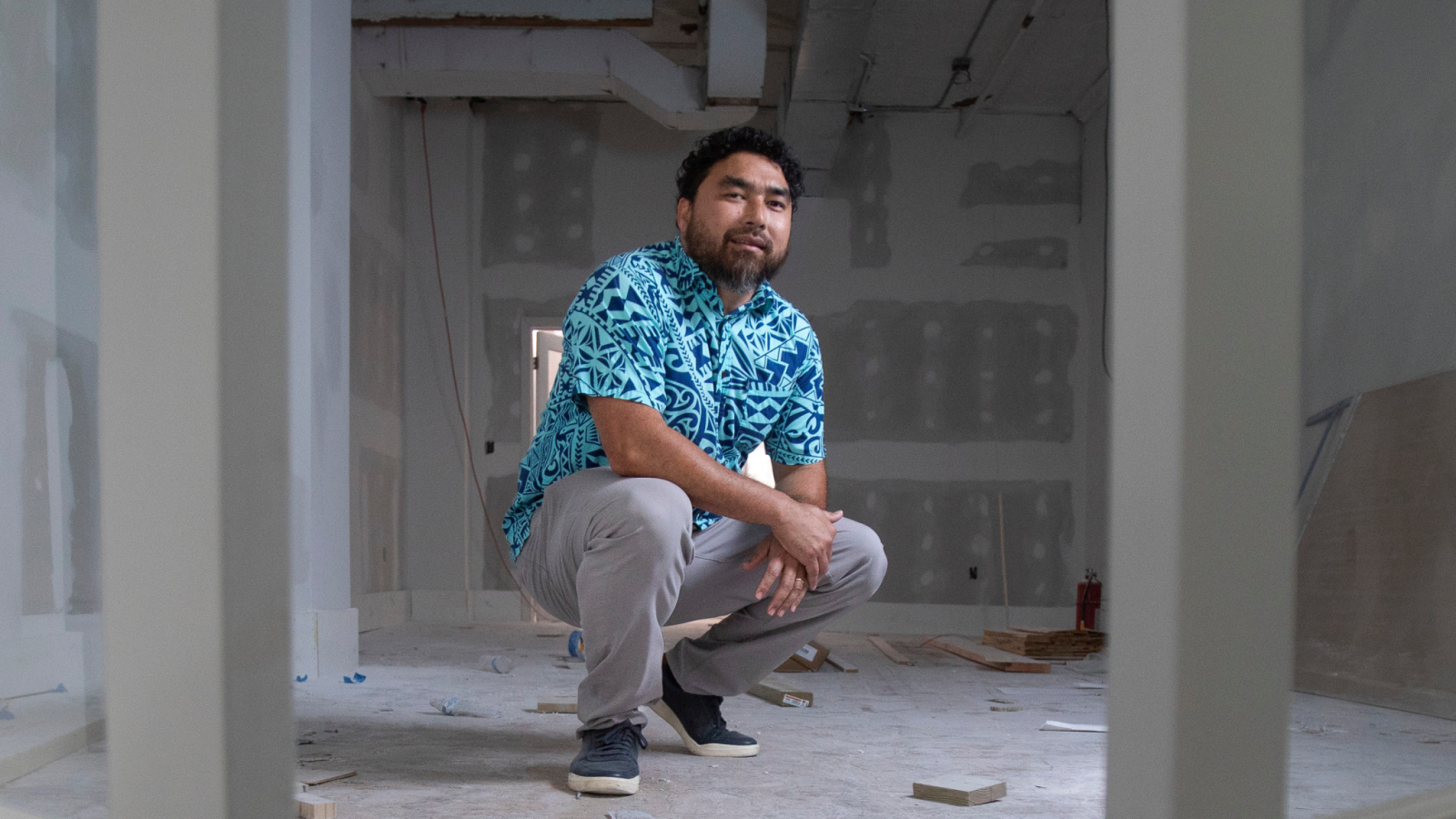
“When I read the job description, I thought, 'This is what I did in high school,'" shares Peter Chung, who in 2011 applied to be a Program Coordinator at Young Voices, a Providence nonprofit. Today he's the organization's executive director, empowering young people to challenge the systems that shape their schools and communities and to lead the fight for change themselves.
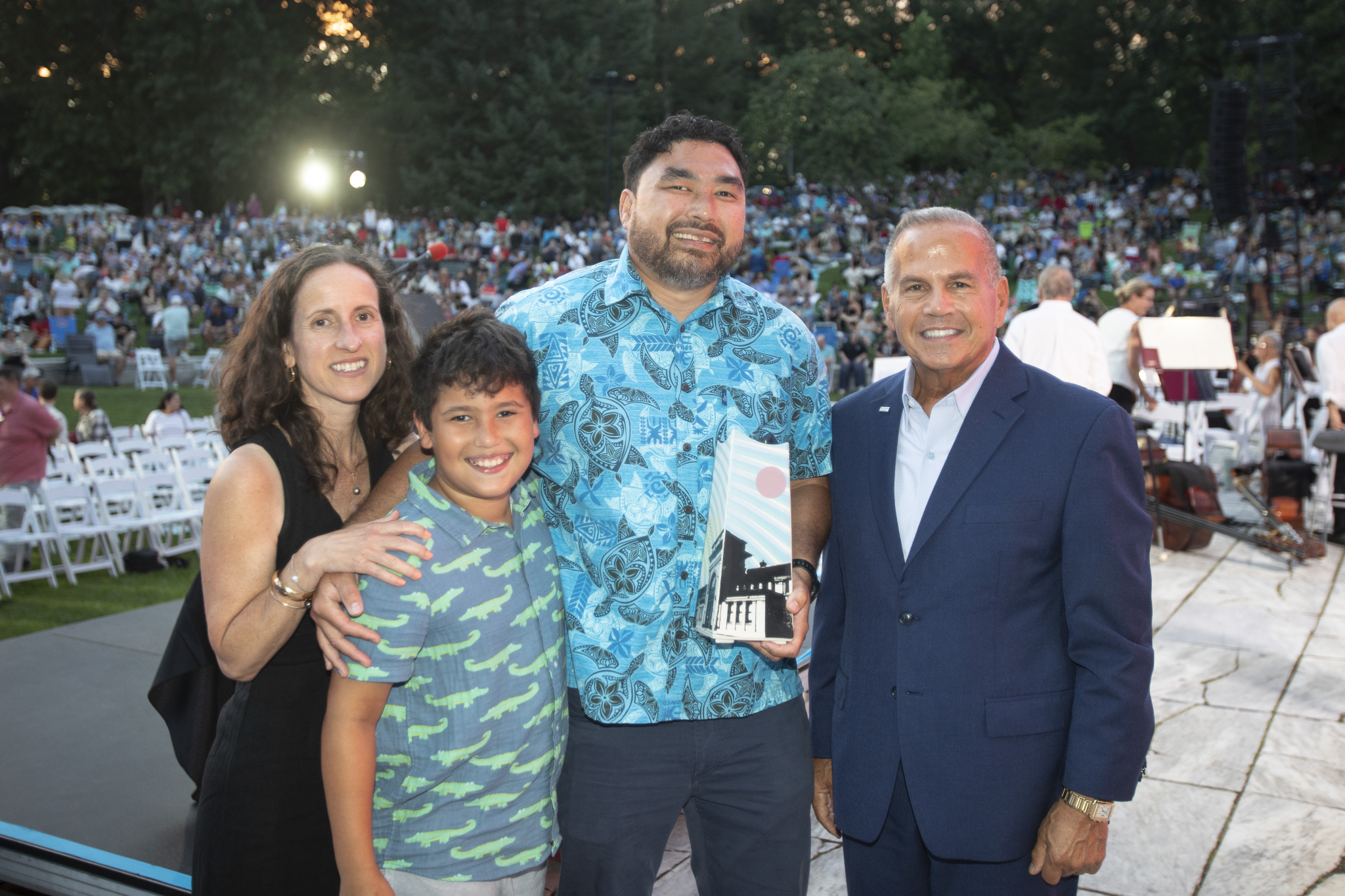
Sixteen years later, Peter's own path reflects the vision at the heart of Young Voices: civic engagement isn’t something young people grow into later. It’s something they can practice now. It’s a journey the Rhode Island Foundation is honoring with its 2026 Civic Leadership Award, recognizing what Peter’s commitment to education, access, and agency has meant for young people across our state.
Peter's route to that work began far from Rhode Island. Born in Fiji to a Tongan mother and a father from mainland China, he was the middle of six children, raised in what he describes as a close-knit culture. "If you visit Fiji, it's the number one thing that you'll notice, how communal it is," he shares. As a teenager, he raced outrigger canoes competitively, eventually earning a spot on Fiji's national team and representing his country at the Pacific Mini Games.
High school is where his interest in advocacy first took hold. Volunteering with Save the Children Fiji under the guidance of a mentor, Peter helped build what would become Kids Link Fiji, born from a question the two of them kept returning to: how do you give young people a voice in decisions about their own rights? The answer to that question came more clearly into focus at a conference in South Korea, where Peter listened to children from Laos, Thailand, and Cambodia describe organizing in their own villages around many of the same economic challenges he recognized at home. "If they can do it, I can do it too," he remembers thinking. Inspired by what he had learned, Peter brought the concept back to Fiji, convening young people at the same village and town meetings where adults gathered, with each group listing its concerns separately, only to discover just how much the two had in common.
He eventually left Fiji for the United States, and after brief stops in Los Angeles and Boston, he settled in Providence, where he’s now lived for 18 years, and where, at Young Voices, he worked his way up from that first role to Operations Manager, then Deputy Director, before being named Executive Director in 2020.
Now in its twentieth year, Young Voices was founded on the belief that young people are uniquely positioned to inform the decisions that shape their lives and deserve a real seat at the table when those decisions get made. More than 1000 young people have come through its programs since. Its year-round Leadership Transformation Academy coaches students in advanced policy analysis, public speaking, and community organizing; its Reimagine Learning initiative puts youth on school redesign committees and has them leading professional development workshops, even teaching classes during the school day; and its college-access program has helped alumni graduate at nearly four times the national rate: 84 percent of Young Voices alumni who enroll in college go on to graduate, compared with just 21 percent among first generation students from lower-income households, nationally.

The organization Peter joined in 2011 was, in his own words, "very grassroots-y,” with three staff members, a budget under $300,000, and programming spread across donated church spaces around Providence, before partnering with local schools. It has since grown into something recognized well beyond Rhode Island, drawing praise from the Bill and Melinda Gates Foundation and the National Council for Teacher Quality for its work on teacher standards and evaluation.
Among his proudest wins, Peter counts the removal of standardized testing as a Rhode Island graduation requirement, with a single test not always an accurate measure of a student’s capability. He credits the five-year effort to the coalition of partners who came together during that time, and, above all, he says, "how much passion young people brought to lead this work." Young Voices students are driving campaigns across the state to bring restorative justice practices into schools, establish a citywide ethnic studies curriculum, adopt trauma-informed policies, and reshape out-of-school-time programming.
Peter is also an alumnus of the Rhode Island Foundation's Equity Leadership Initiative, which offers mid-level professionals and managers in Rhode Island's nonprofit and public sectors a capacity-building opportunity centered on the experiences of people of color, with an emphasis on social-impact management and leadership skill building through an equity focus.
He served on the Foundation's Blue Ribbon Commission, an 18-member panel of educators, parents, municipal officials, and advocates that spent a year studying the state's school funding system, work he calls a natural extension of being invested in public education, both professionally and personally. The commission considered young people’s input essential to its findings, and Peter helped to make that happen, working with Brown's Annenberg Institute to recruit students from across the state to review recommendations and testify before legislators.
"They all came with so much empathy," Peter says of the students, recalling how young people from more affluent districts pushed for statewide fixes that wouldn't directly benefit them. The Commission's resulting report, Equalizing Opportunity: Creating a Fair and Transparent Funding System for Rhode Island's Public Schools, has since informed legislation moving through the State House.
Beyond Young Voices, Peter has stepped into the role his own mentor once played for him, offering guidance to nonprofit leaders across the state, particularly as federal funding cuts have strained the sector in recent years. His advice echoes a lesson he says he carried out of the pandemic: focus on what you can control.
"Deepen the collaborations that you have," he shares. "We’ve got to stick together, and we’ve got to lean on each other in moments like this."
Here more from Peter on our podcast Together RI
Share this article