Grants & Scholarships
Jobs by Design
Removing barriers to education, employment, and economic mobility
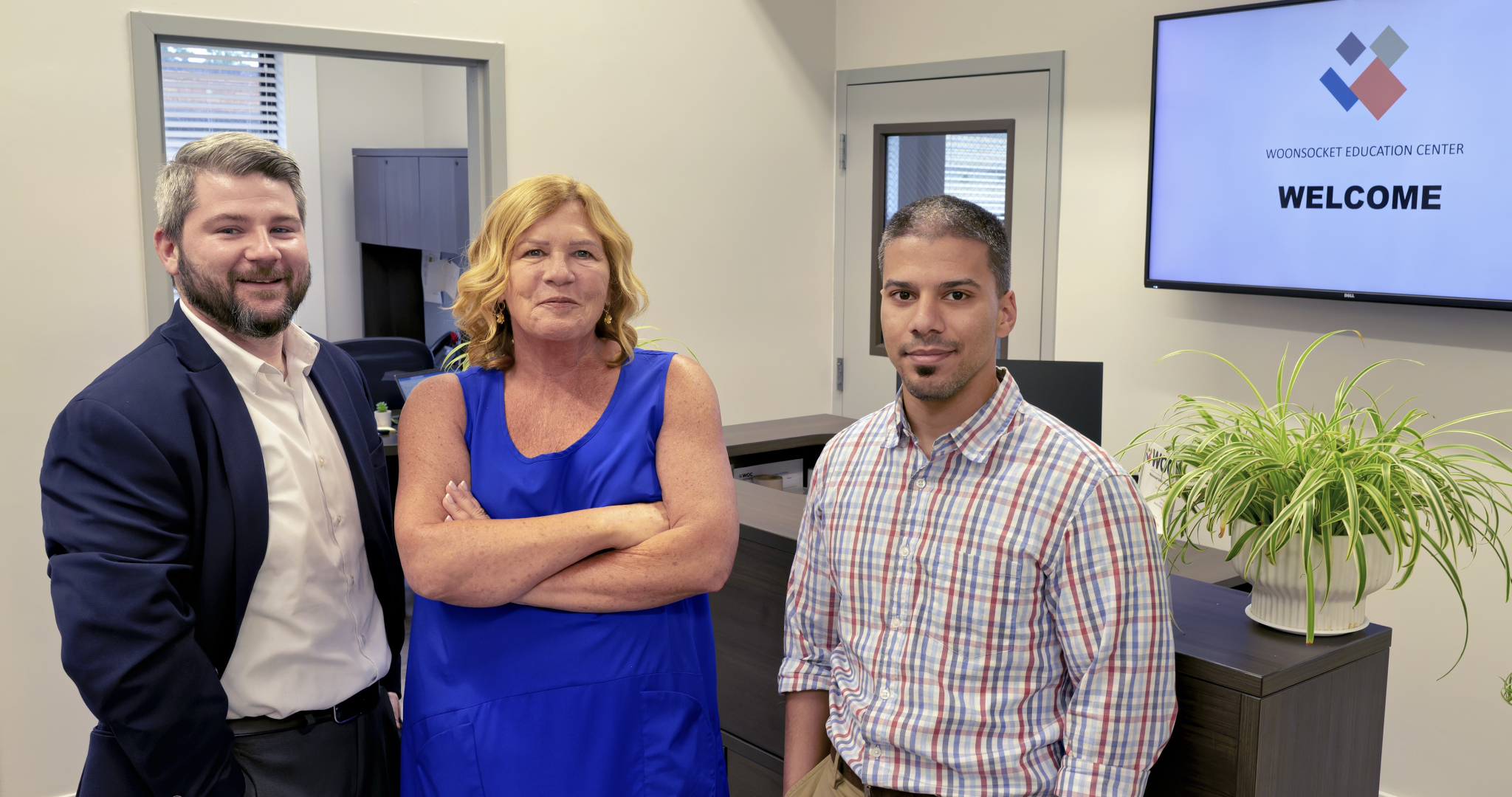
On Main Street in downtown Woonsocket, a collaborative community training center is helping adults across northern Rhode Island turn education into employment.
Managed by the state’s Office of the Postsecondary Commissioner, the Woonsocket Education Center (WOC), opened its doors in August 2022. The Center runs on coordinated partnerships: the state provides the location and oversight, and local educators like Rhode Island College and the Community College of Rhode Island design and teach the coursework. Area hospitals, schools, and businesses inform course offerings, advising which skills are needed to fill essential roles in the area, and, as potential employers, they often go on to hire the Center’s graduates.
"Woonsocket Education Center exists to serve adult Rhode Islanders, especially those living in Woonsocket, Central Falls, Pawtucket, and surrounding communities, who are looking to transition into the workforce, change careers, or improve their professional standing via education," says Jill Olson-Crowley, the Center’s executive director. "We create pathways to postsecondary education and employment, which in turn helps create the opportunity for individual upward mobility." That mission draws a wide range of people through WOC's doors: career changers, people re-entering the workforce, longtime employees looking to move up, and those just beginning their journey.
What ties this diverse group of students together is WOC's employer-first model. "We choose programs that meet today's workforce needs so that the graduates waste no time between graduation and employment," says Olson-Crowley. "We have relationships with the employers and inform them when newly trained graduates are available for hire. For northern Rhode Island, these real, well-paying jobs exist in healthcare, business, technology, and elementary education. We know that our employer-driven model benefits both job seekers and businesses while simultaneously strengthening the local economy."
"Many adult learners face barriers that extend far beyond classroom work. They worry about tuition, transportation to class, childcare while they are enrolled, learning disabilities, and sometimes language barriers — all of which can prevent talented individuals from pursuing education. Our goal is to remove as many of those barriers as possible so that they can focus on learning, earning a credential, getting a better-paying job, and changing the trajectory of their lives."
Just as central to the model is cost. Every program WOC offers is completely free. "Many adult learners face barriers that extend far beyond classroom work. They worry about tuition, transportation to class, childcare while they are enrolled, learning disabilities, and sometimes language barriers — all of which can prevent talented individuals from pursuing education," Olson-Crowley explains. "Our goal is to remove as many of those barriers as possible so that they can focus on learning, earning a credential, getting a better-paying job, and changing the trajectory of their lives." WOC’s model is especially impactful for individuals and families in the region, with Central Falls, Woonsocket, and Pawtucket reporting median household incomes well below the statewide average, and a poverty rate in Central Falls more than double Rhode Island's overall.
The Rhode Island Foundation's support for WOC totals more than $150,000, including a $65,000 Community Priority Grant that gave the model real momentum this past year. The funding allowed WOC to deliver five workforce training cohorts spanning four fields, Microsoft Basics, QuickBooks, Teacher Assistant, and Medication Aide/Technician, for adult learners across Woonsocket, Central Falls, and Pawtucket, in partnership with Rhode Island College and CCRI.
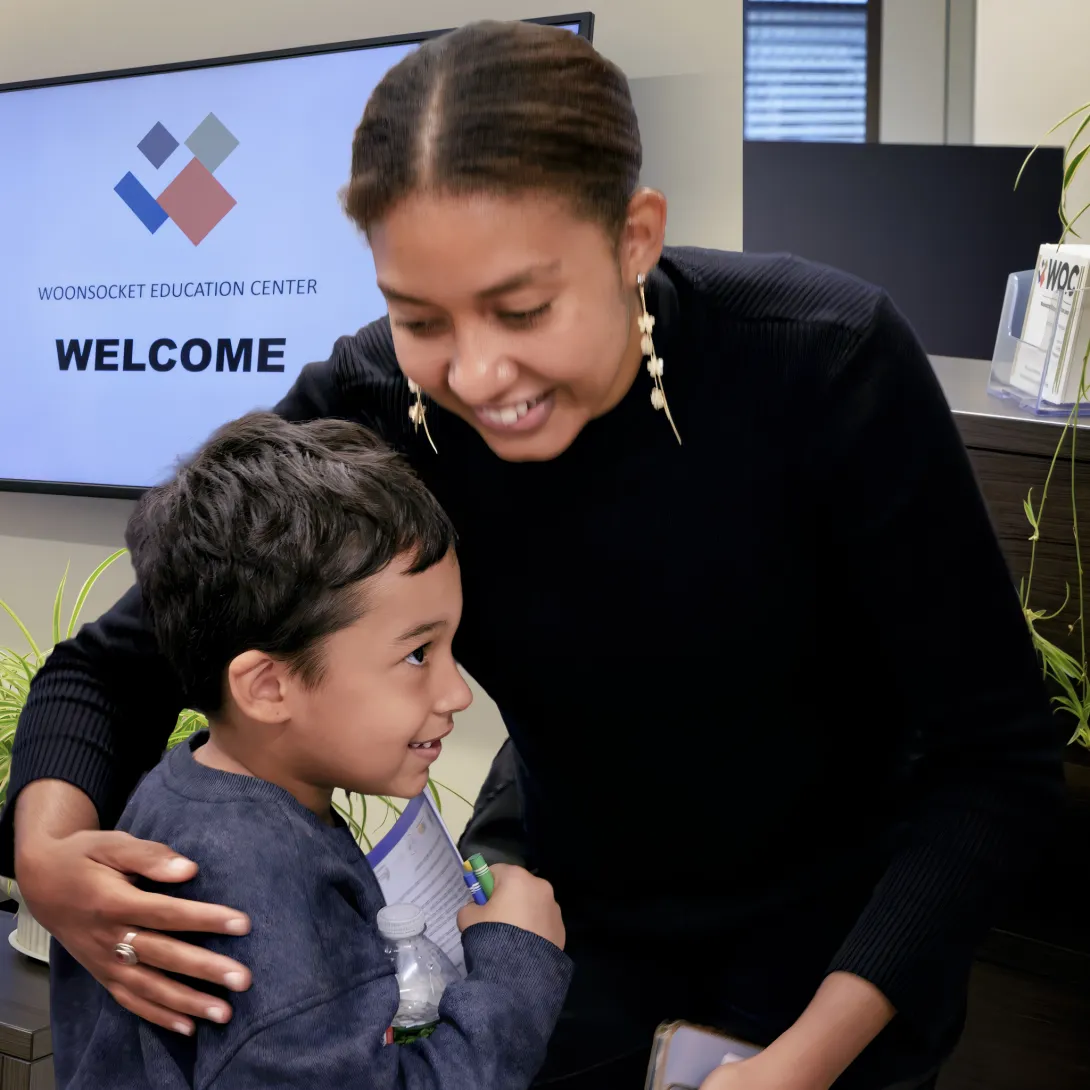
The results exceeded expectations. Against a goal of serving 72 participants, WOC enrolled nearly 100 adult learners and graduated 86 — 64 percent built on skills they already had to move up in their current field, and 36 percent learned new skill sets for new roles. Wage gains were especially strong in healthcare and business tracks: in the Medication Aide/Technician program, all participants were classified as upskilled, and every unemployed student who responded to a follow-up survey reported receiving a job interview after completing the training. QuickBooks graduates saw meaningful movement out of the lowest income brackets, and Teacher Assistant graduates achieved employment rates as high as 94 percent.
Just as important as the numbers, though, is what happens after graduation. WOC doesn't simply teach a skill and send participants on their way, it works to ensure a job is waiting on the other side. "We aren't just supporting the training and education itself," says Carmen Diaz-Jusino, the Rhode Island Foundation's grant officer for the program and its Director for Economic Mobility. "We are also supporting real-time, real-life employment through successful community partnerships." In 2024 alone, graduates of WOC's healthcare, technology, and early childhood education programs went on to secure jobs with Thundermist, Lifespan's Cardiovascular Unit, Koch Eye Associates, Miriam Hospital, and PACE RI. "Employers consistently value Woonsocket Education Center because our programs are built around their workforce needs, creating a stronger pipeline of qualified candidates," says Olson-Crowley.
Among this year's Teacher Assistant program graduates is Enny Sepulveda, who enrolled after her youngest son was diagnosed with autism, ADHD, and anxiety, and she wanted to better understand his rights and how to advocate for him at school. Balancing the training program with four children and a household was challenging, and she did it while navigating a language barrier; English is her second language. "There were nights when I was completely exhausted and days when I wanted to give up," says Enny. "But every time I looked at my son, I remembered why I started. I wanted to understand his world. I wanted to become a better mother. Today, I can honestly say that every sacrifice was worth it."
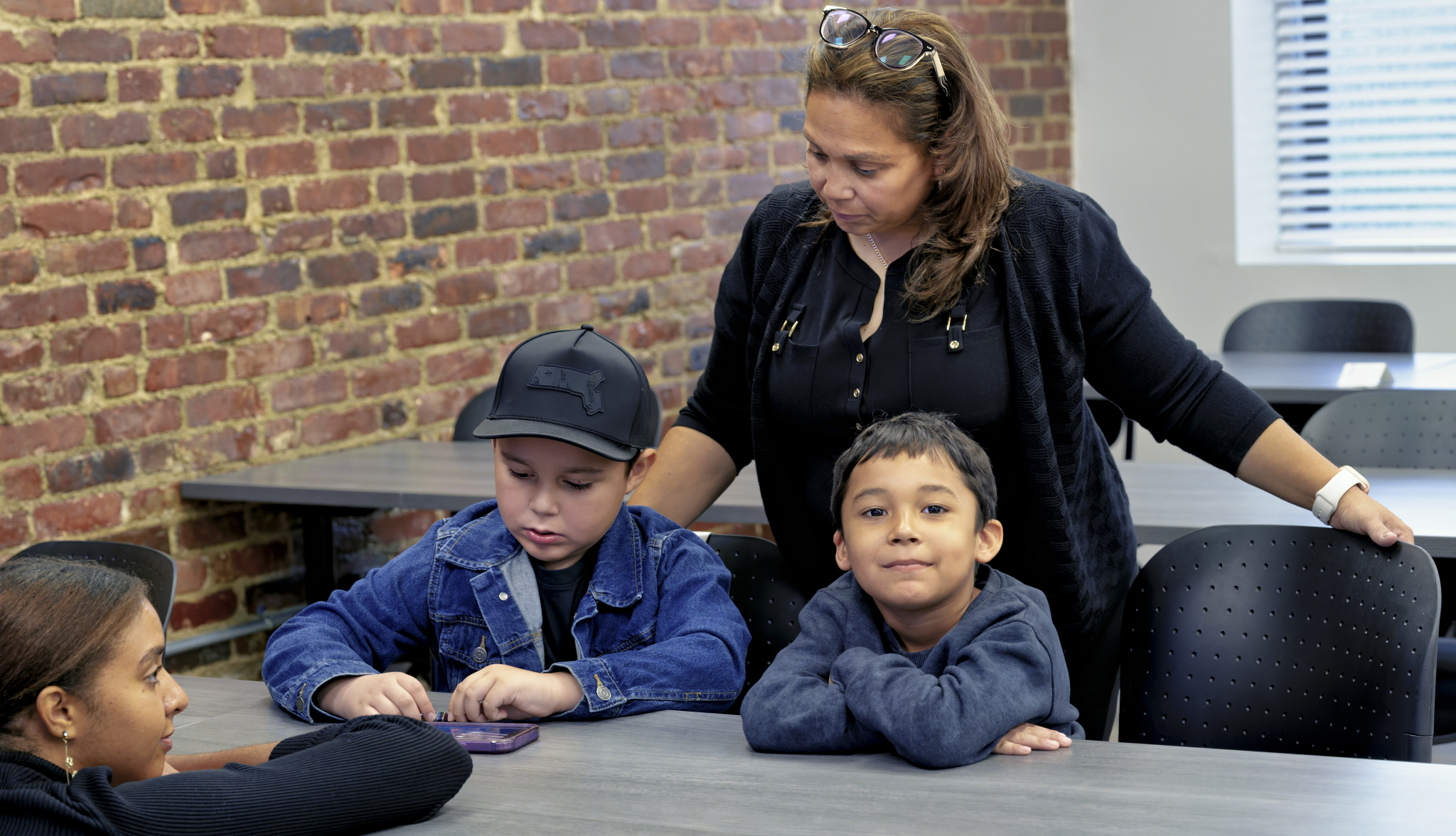
After completing her training, Enny was hired as a teacher assistant for the Woonsocket School system, a district that regularly turns to WOC to fill these roles. "Enny’s positive, can-do attitude and perseverance inspire me," Olson-Crowley shares. “Her success demonstrates that determination, combined with accessible education, changes lives."
For Woonsocket Superintendent of Schools Dr. Patrick McGee, Enny’s story is a tangible example of the wider, sustaining value that accompanies access to education.
"One of the most effective ways we can support our students is by supporting their families," says McGee. "Our partnership with the Woonsocket Education Center is creating real opportunities for families, parents, and community members to gain new skills, earn industry-recognized credentials, and pursue family-sustaining careers — all at no cost to the family. When parents have access to these opportunities, it creates a ripple effect. Families become stronger, students see what's possible through hard work and education, and our entire community reaps the benefits."
Also among WOC's graduates is Emely, who had been discouraged from pursuing a career in healthcare because she uses a wheelchair. The Center’s accessible facility, supportive learning environment, and employer-focused training resulted in her successful completion of its patient support specialist program.
Between career changes, physical challenges, language, and financial need, the barriers WOC's students face vary widely. What remains constant are the Center's guiding principles: that education should be within reach for everyone, and removing what stands in the way is central to its work.
Olson-Crowley is direct about what the Foundation's support has made possible. "The Rhode Island Foundation's investment has done far more than fund workforce classes," she says. "It’s enabled Woonsocket Education Center to keep workforce training programs free; expand our partnerships with educators and employers; respond quickly to changing employer demand; and to reach adults who otherwise could not participate."
This funding reflects the kind of work the Foundation prioritizes across Rhode Island: connecting education, jobs, and opportunity. Removing a single barrier, whatever form it takes, can change the trajectory for a student, a family, and a community.
Ultimately, Olson-Crowley says she's most proud, not of the enrollment figures, but of the personal and professional growth participants experience over the course of a program. "Many arrive uncertain about their abilities and leave believing they can succeed in college, in the workplace, and in life.”
Share this article