Media release
Three local artists receive $30,000 MacColl Johnson Fellowships
Selected from 144 applicants, the recipients will use the funding to spend more time making art and less time making ends meet
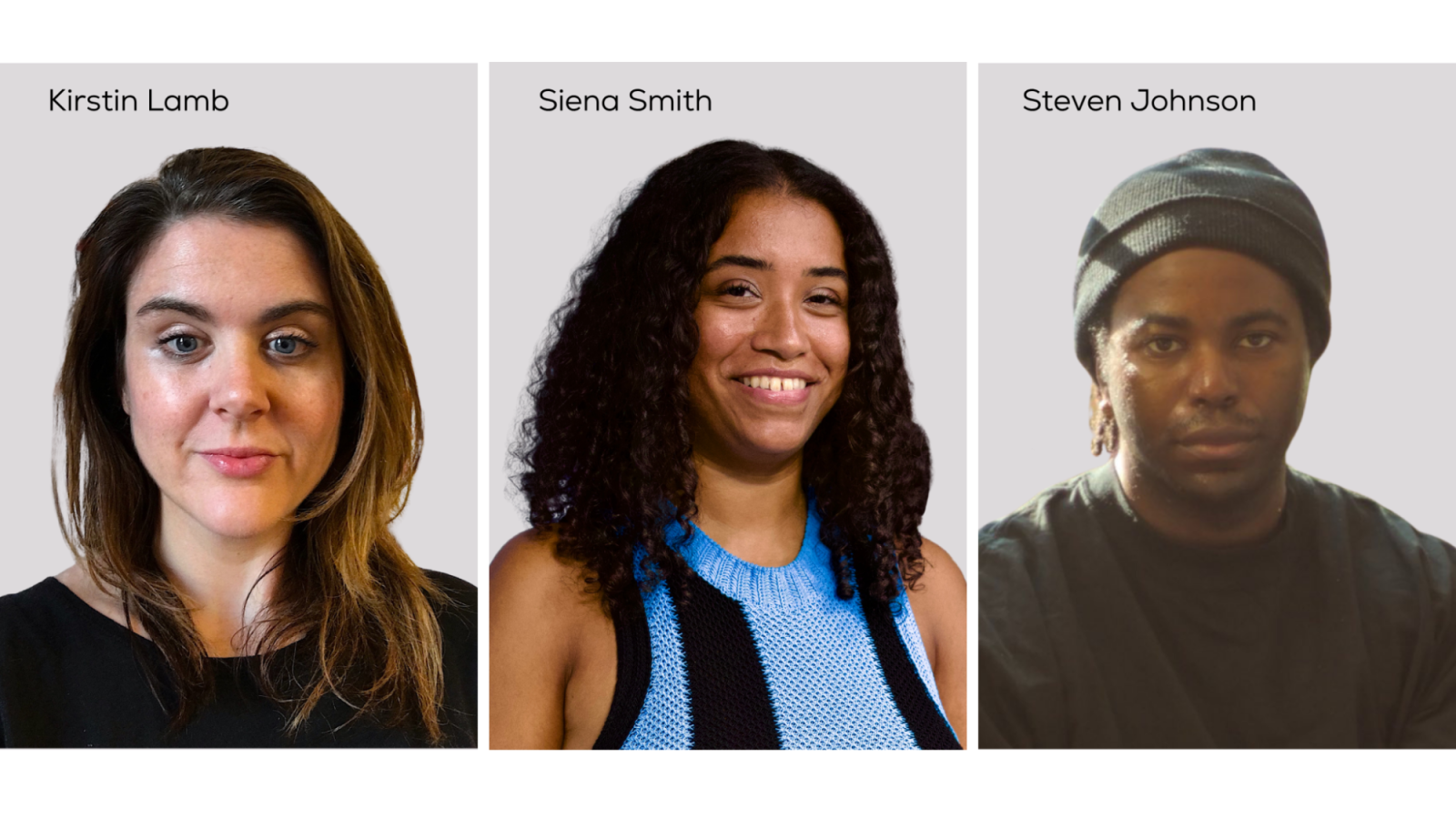
Three Rhode Island artists will receive what are considered to be among the largest no-strings-attached grants available to artists in the United States. Steven Johnson, Kirstin Lamb and Siena Smith will receive $30,000 grants from the Foundation’s Robert and Margaret MacColl Johnson Fellowship Fund.
The Fellowships are intended to enable artists to concentrate time on the creative process, focus on personal or professional development, expand their body of work and explore new directions.
“By giving these artists the financial freedom to advance their craft, we invest in their future and in the cultural connections that bring us together as neighbors,” said David. N. Cicilline, the Foundation's president and CEO.
Johnson is a multi-dimensional artist whose approach includes drawing, altar building, installation, printmaking, photography and oral history collection.
“My works are a counter-narrative to the overwhelming onslaught of content about the oppressed. I make Blackness and darkness the protagonist, shifting the paradigm which considers whiteness/light the dominant form,” they said.
Johnson plans to use the fellowship to work on a new drawing, oral history and site-specific installation practice that will seek to tell the story of a dwindling community of HIV/AIDS and “War on Drugs” survivors in historically Black and Latino, bi-coastal and transatlantic communities.
“We are rapidly running out of time to collect, disseminate and digest these stories. This work will recenter Black wisdom in order to facilitate a new, urgent cross-generational conversation often made inaccessible – or impossible – given the missing generation of Black and Brown Queer bodies due to the uneven effect of the AIDS crisis in America,” they explained.
Johnson plans to create 30 life-sized drawings and to capture 90 plus hours of oral history as well as to process all the audio and drawings that lead up to each installation by hand.
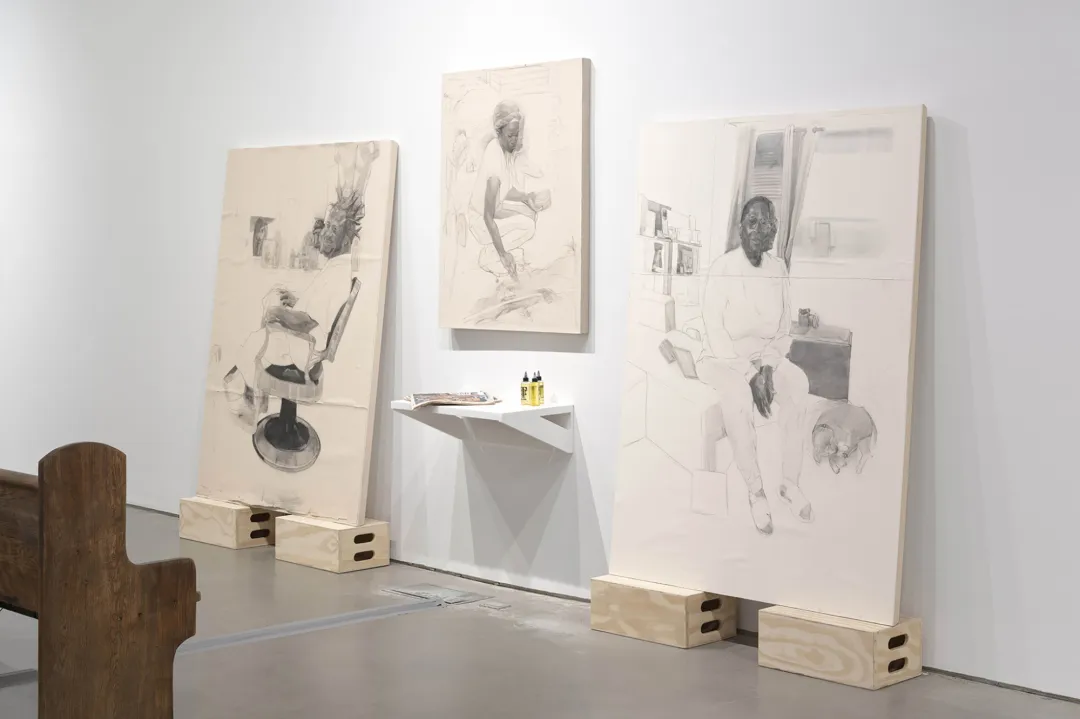
“In preserving and sharing the lived pasts and the imagined futures of their progenitors, participants navigate the stewardship of storytelling and skill sharing necessary to preserve ancestral knowledge and resistance,” they said.
Johnson’s work has been exhibited at the Armory Art Fair, Home Gallery in New York, the ISCP Project Gallery in Brooklyn, the Field Projects Gallery in New York and the Gromley Gallery at Notre Dame of Maryland University.
The Providence resident is an assistant professor of Illustration at the Rhode Island School of Design (RISD). They earned a B.F.A. at the Maryland Institute College of Art, an M.F.A. at the New York Academy of Art and a residency at the Skowhegan School of Painting and Sculpture.
Lamb focuses her work on forests. Her style relies on a labor-intensive process of gridded dots. The works are based on digital patterns she makes from photographs, which she then paints on a wet media acetate.
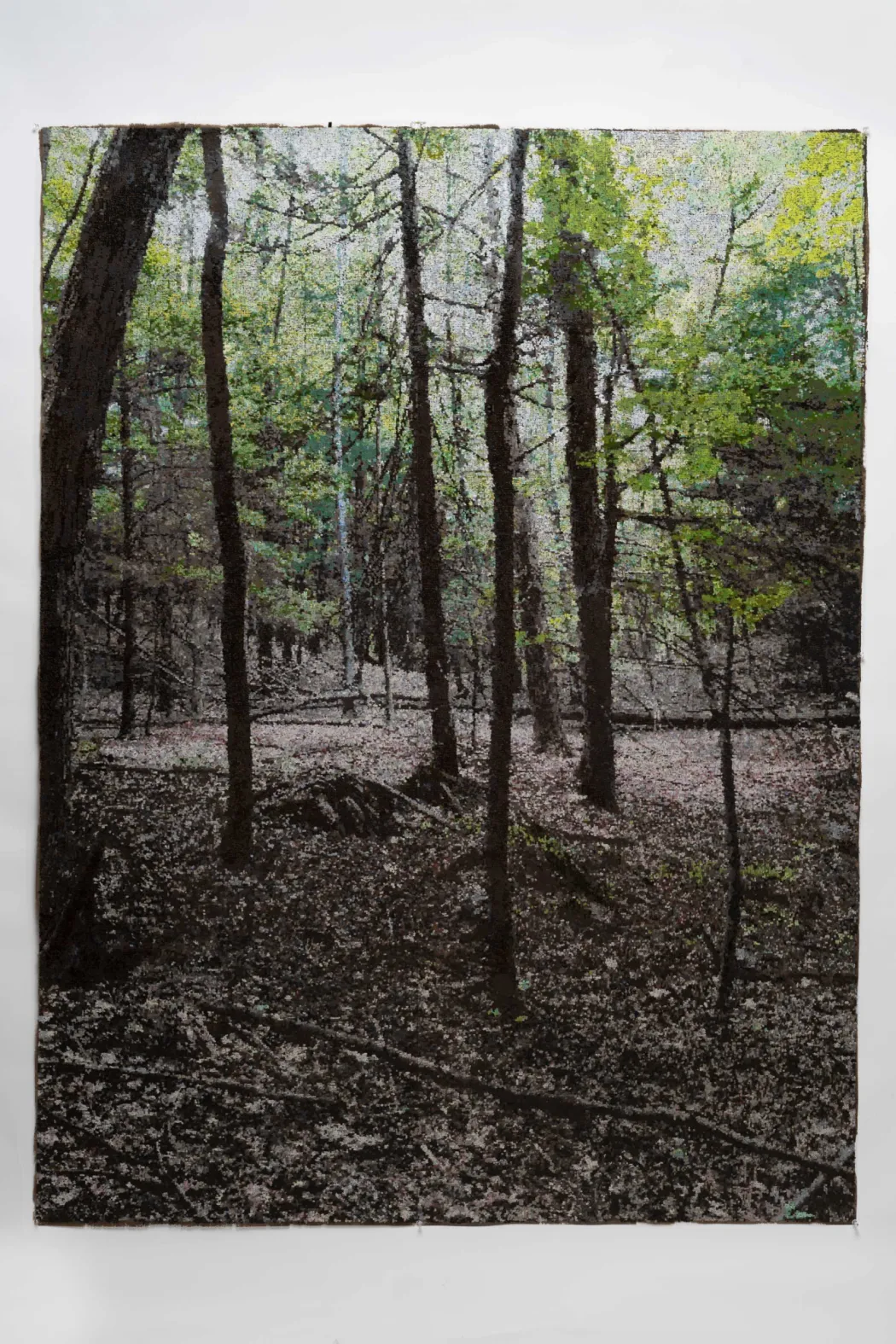
"My woods paintings image spaces that I have walked through on foot. The patterns are derived from the photographs but also abstract and blur the photograph to a greater or lesser degree, depending upon the scale and complexity of the image,” she explains.
Many of her images are of Rhode Island locations such as Lincoln Woods.
“I want the experience of my paintings to be much like walking in the woods. I hope to image the woods in its current state, as it exists now, near me. We have precious resources in both humble scrub brush or elegant old growth forests, all worth documenting as they are seen in our moment,” she said.
Lamb plans to use her fellowship to travel and expand her research on the woods and to spend focused time and attention on developing her style.
“Having the freedom to focus on my painting would help me to make larger and more impactful work that could reach a broader audience. I would find the visibility and possibilities of working on a larger platform. Having more time to devote to studio work would be hugely impactful to my artwork and growth,” she said.
Lamb’s work has been exhibited at the Gallery NAGA in Boston, the Jennifer Terzian Gallery in Litchfield, Conn., the Overlap Gallery in Newport and the AS220 Project Space in Providence.
She has been an adjunct lecturer at Clark University, Providence College, RISD, Brown University and Salve Regina University. In addition, she has curated exhibits at the Overlap Gallery in Newport, the South County Art Association in Kingston and the Dorrance Hamilton Gallery at Salve Regina.
The Providence resident earned a B.A. in English and Visual Arts at Brown and an M.F.A. in Painting at RISD.
Smith's art intentionally relies on a Jacquard loom, a piece of 19th century technology that helped fuel the global trade in slave-picked cotton by speeding up the production of woven fabrics.
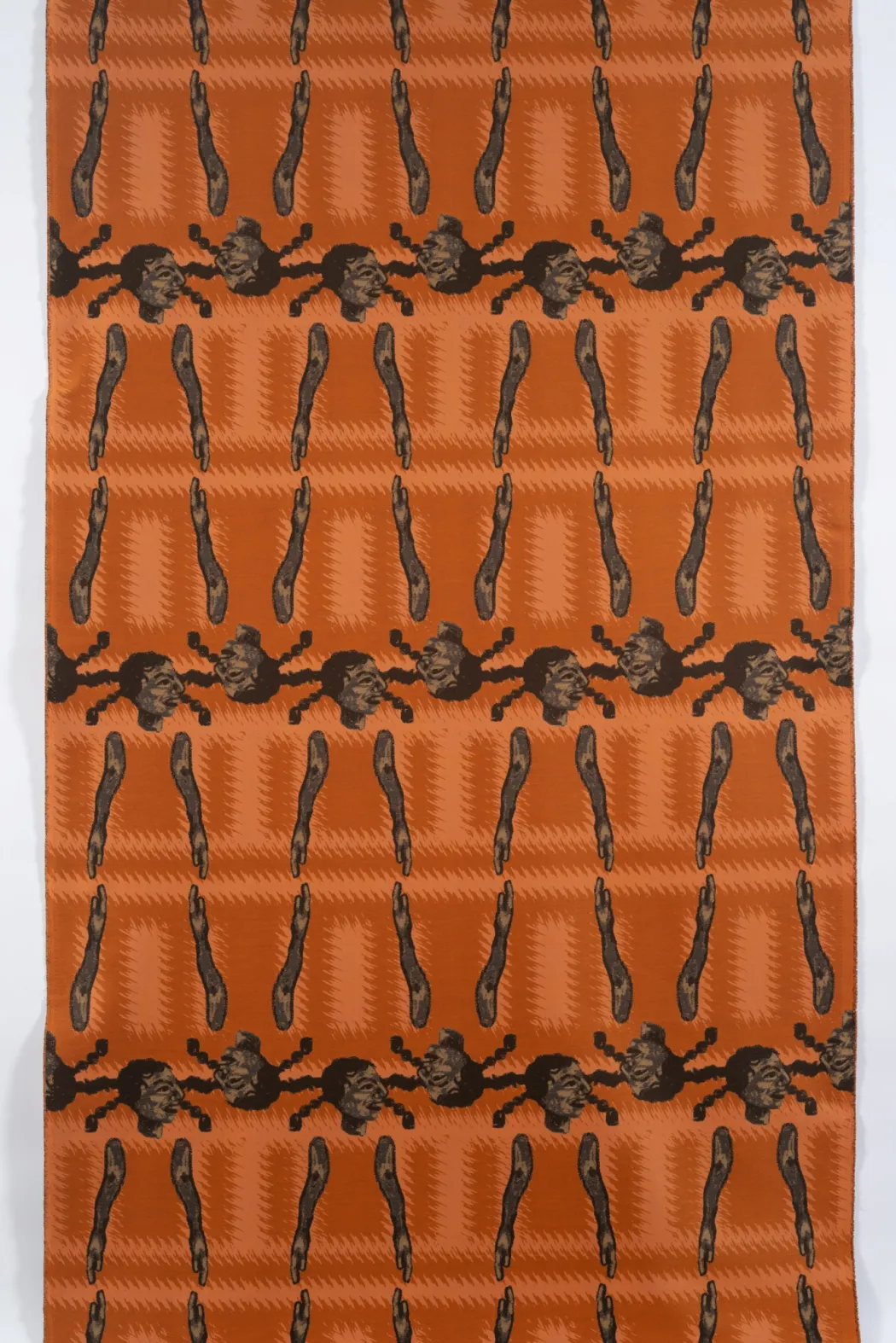
“As a Black-American woman, I engage with a tool that funded slavery and clothed my ancestors to try to reclaim that space and to activate Black personhood, agency, passion, mourning and resistance and celebrating Black ways of knowing and remembering, like weaving, piecing together quilts, braiding, beading, molding vessels to carry messages, and beyond,” she said.
Smith says her fellowship will enable her to experiment with new techniques, to deepen her engagement with textile history and to amplify narratives embedded in cloth that speak to identity, resilience and ancestral knowledge.
“Most critically, I will be able to engage in sustained practice within specialized textile maker spaces that offer Jacquard loom access. These spaces are not only essential for producing my work at a larger and more ambitious scale, but they also serve as vital hubs for collaboration, learning and community – elements that are central to my artistic process,” she said.
Smith’s work has been exhibited at NADA Miami, the Knowhere Art Gallery in Martha’s Vineyard and the RISD Museum. She is an Arts and Cultural Organizing Fellow at Boston Ujima Project.
At RISD, Smith serves as adjunct faculty and as a summer pre-college instructor and previously served as an assistant professor in residence. The Providence resident earned a B.F.A. in Textiles at RISD and an M.F.A. in Fiber and Material Studies at the Art Institute of Chicago.
Johnson, Lamb and Smith were chosen by a panel of out-of-state jurors who are professional artists. The recipients were selected based on the quality of their work samples, artistic development and the creative contribution to their genre, as well as the potential of the Fellowship to advance their careers as emerging-to-mid-career artists.
The selection panel also named three finalists: Samuel Aguirre, Kannetha Brown and Joanna Cortez. They will receive $3,000 stipends and have been provided an opportunity to develop their practice at a two- to four-week in-person residency program.
Applicants had to be legal residents of Rhode Island. High school students, college and graduate students who are enrolled in a degree-granting program and artists who have advanced levels of career achievement were not eligible.
The Fellowships are just one example of the Foundation’s support for the arts. In 2025 alone, the Foundation awarded $4.3 million in grants through its Civic and Cultural Life Community Priority.
Established in 2003, the MacColl Johnson Fellowships rotate among composers, writers and visual artists over a three-year cycle. The next round will be awarded to composers. The application will be available on the Foundation’s website after July 1.
Rhode Islanders Robert and Margaret MacColl Johnson were both dedicated to the arts all their lives. Mrs. Johnson, who died in 1990, earned a degree in creative writing from Roger Williams College when she was 70. Mr. Johnson invented a new process for mixing metals in jewelry-making and then retired to become a full-time painter. Before he died in 1999, Johnson began discussions with the Foundation that led to the creation of the Fellowships.
The Rhode Island Foundation is the largest and most comprehensive funder of nonprofit organizations in Rhode Island. Through civic leadership, fundraising and grantmaking activities, together with neighbors and partners, the Foundation is helping to create progress that lasts.
Share this article