Impact
Celebrating What’s Possible: Child & Family at 160
"There can be no keener revelation of a society's soul than the way it treats its children." — Nelson Mandela
In 1866, as local resident Ellen Townsend walked the streets of Newport, she witnessed the tragedy of orphaned children, left without family or means, begging for survival — one of the many devastating social impacts of the Civil War.
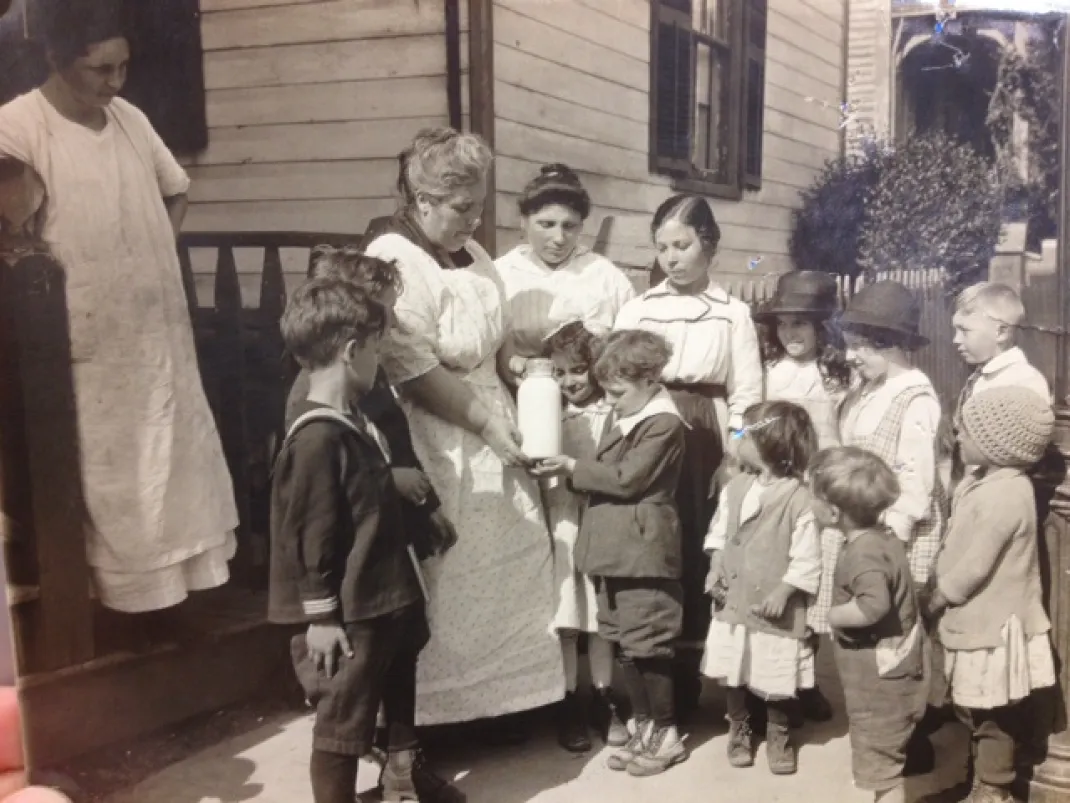
The plight of these children moved her to act, persuading her brother, Christopher, to donate their family home along with $500 for repairs, establishing the Home for Friendless Children: a place where the most vulnerable in the community could find care.
That founding act of compassion has endured 160 years.
Today, the safety and shelter that began at Ellen’s home has evolved into Child & Family, one of Rhode Island's most trusted human service organizations — its reach expanding over the years to support not only children, but families and elders across the entire state. And while much has changed since those early days at 24 School Street, the organization's deepest conviction has not.
"We believe that people thrive in families," says Susan Jacobsen, who joined Child & Family as President and Chief Executive Officer in 2025, "and that families work best when the community cares for all of its members."
A Different Kind of Organization
What makes Child & Family genuinely unusual — even among organizations that have served their communities for generations — is the range of people it serves and the way that it serves them.
Most human service agencies specialize. They focus on children, or on housing, or on elder care. Child & Family does something unique. Operating community engagement centers in both Middletown and Providence, it offers services to Rhode Islanders at every stage of life, from early childhood care and education, to support for elders to maintain independence. The Sandpipers Early Learning Center in Middletown welcomes children as young as six weeks old. At the other end of the spectrum, the Aging Well program helps seniors remain safely in their own homes. There are family therapy and substance use recovery programs, foster care services that match children with nurturing families, independent living programs for teenagers aging out of foster care, and behavioral health services that treat not just the individual, but the whole family.
"I don't know of any other organization that captures a lifespan quite the same way," shares Patricia Holliday, the organization’s board chair.
"When people let you into some of the hardest and most challenging moments of their lives, you are walking on hallowed ground."
The through-line connecting it all is a simple but powerful idea: when people are struggling, they don't need to be told what's wrong with them. They need someone to see what's strong in them — and build from there.
"When people let you into some of the hardest and most challenging moments of their lives, you are walking on hallowed ground," says Jacobsen. "If we only see what's wrong, it's tremendously disrespectful."
This distinct perspective shapes how Child & Family's teams approach their work. Rather than asking families to fit into predefined categories of need, they ask what's working — who in the family's circle of friends, neighbors, and extended family can provide support, and how those natural connections can be nurtured and strengthened.
The organization's family therapy programs are built on a foundation of "noble intent,” the idea that people's behavior, even when it looks difficult or seems confusing from the outside, is almost always an attempt to meet a real need. Finding that intent, rather than labeling the behavior, opens a very different kind of conversation. It is also a reminder that everyone, regardless of their circumstances, deserves to be seen clearly, treated with dignity, and given access to the quality of care and education that helps families, and in turn, communities, to flourish.
Willing to Change
Over its 160 years, the organization has also shown a willingness to completely rethink how it delivers on its mission to strengthen individuals, families, and communities. When research challenged long-held assumptions about the best way to care for young people, Child & Family listened.
For decades, the organization operated group homes for young people, as the prevailing belief at the time held that best practice involved removing struggling teenagers from difficult home situations and placing them in structured residential settings – homelike, but not home.
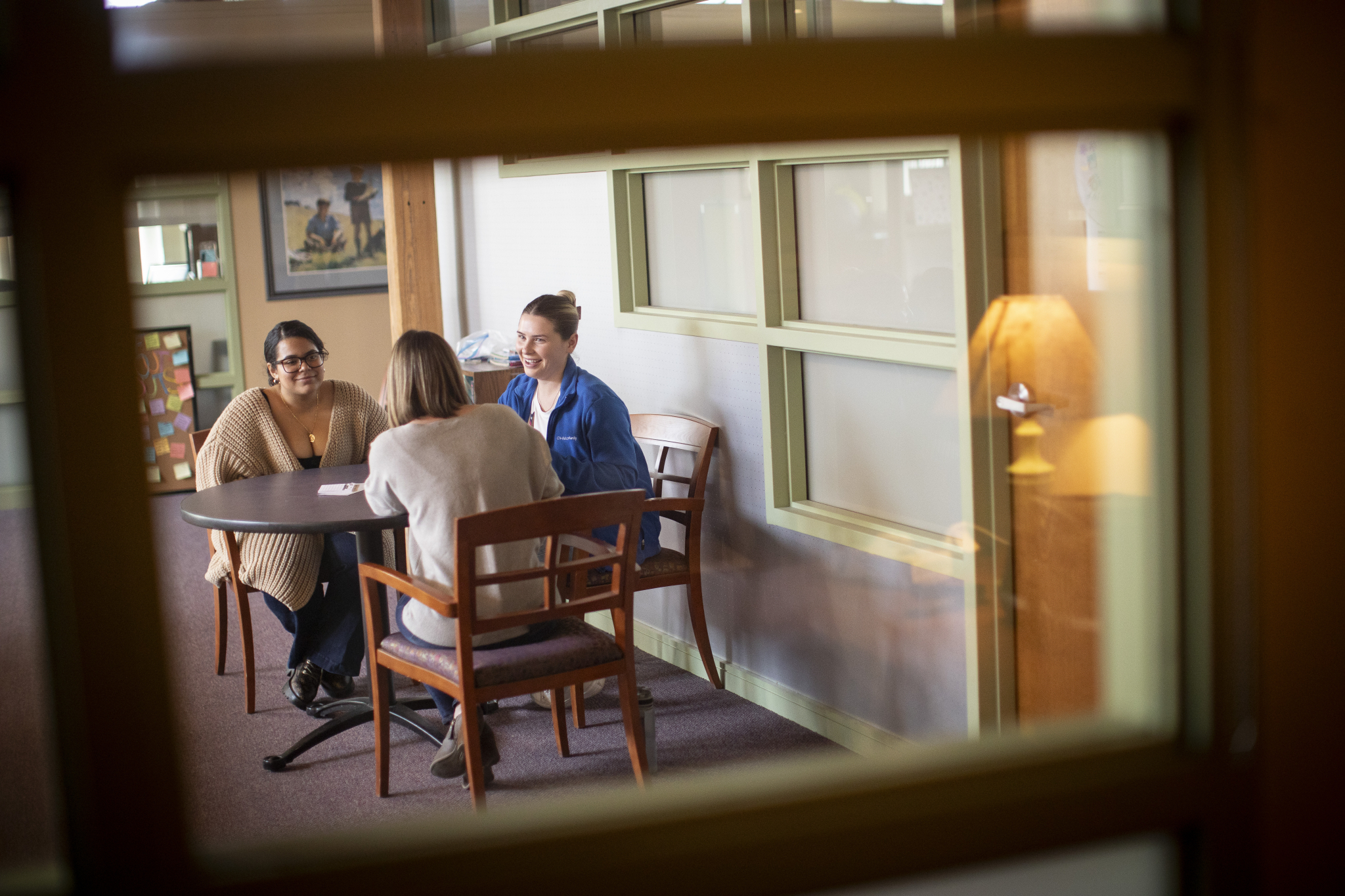
As research accumulated and advanced, it became clear that this residential model often caused more harm than good. Young people in these settings frequently felt isolated and disconnected — from their families, their communities, and any lasting sense of belonging. The evidence pointed firmly toward keeping families together whenever possible, and toward family-based foster care when that wasn't an option.
Child & Family changed course.
"We've really moved assertively in that direction," says Rob Archer, Vice President of Quality and Program Operations, who has been with the organization for 19 years. "These are research-based approaches — ways to work with families that actually work."
Today, the organization operates just one independent living home for young adults aging out of foster care. Its energy has shifted toward in-home support programs, quality care for children with complex needs, and community-based services that help families stay together and grow stronger.
Making that kind of structural shift takes resources, time, stability, and the ability to weather the transition. It is precisely why the organization's relationship with the Rhode Island Foundation — and the endowment that anchors it — matters as much as it does.
"Throughout the history of this organization, philanthropy has allowed us to make very big pivots in moments when we knew that was the right thing to do," Jacobsen explains.
A Place for Everyone
Child & Family's Sandpipers Early Learning Center demonstrates what becomes possible when quality care is made accessible to everyone.
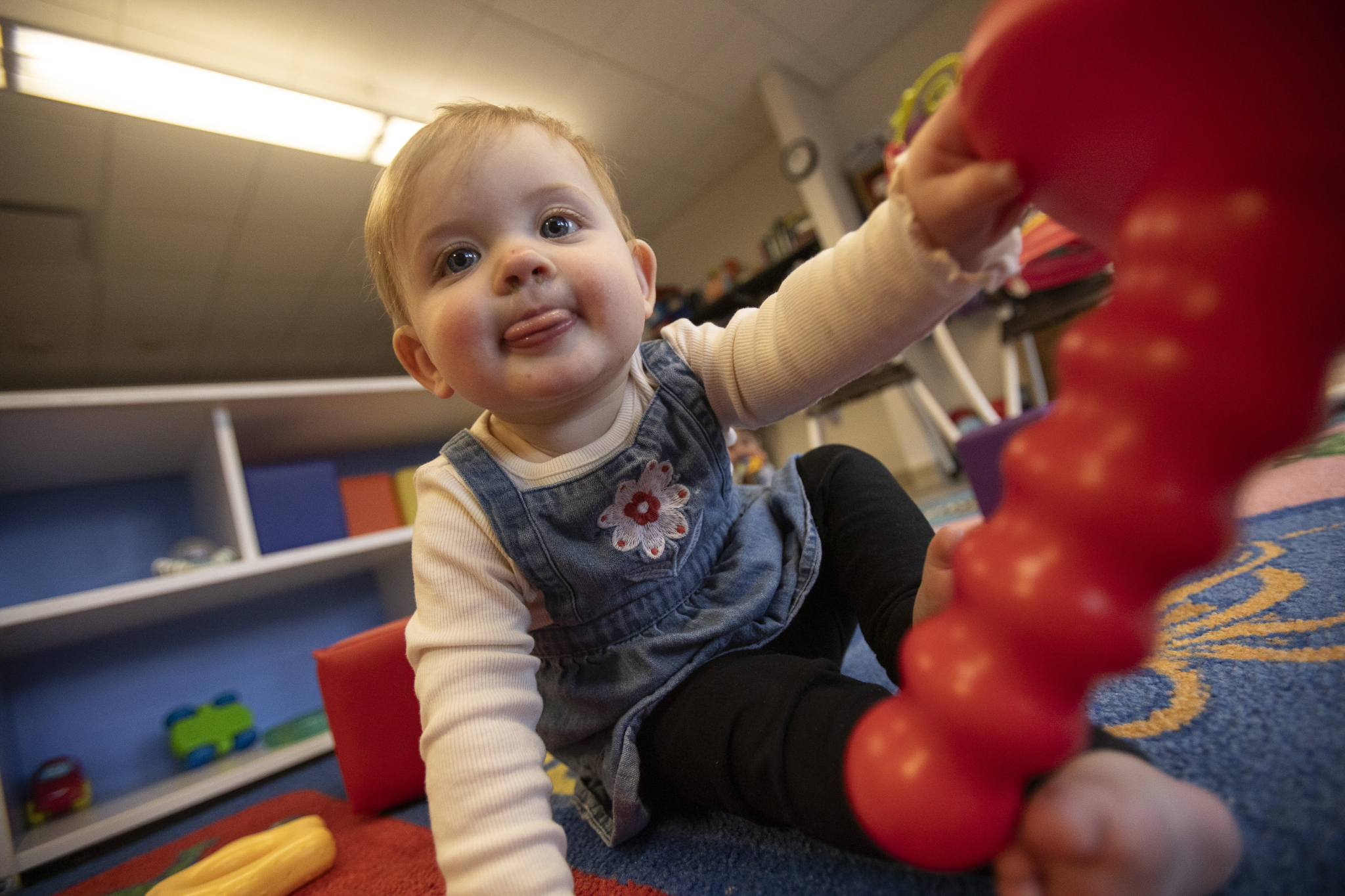
Located at the Middletown community center, serving children six weeks through age five, Sandpipers offers full-time early care and education to families across the full economic spectrum. Through a sliding scale tuition model, high-quality early education is available to every child regardless of what their family can afford.

That belief, that everyone deserves quality care and support regardless of their circumstances, shapes not only the programs that Child & Family provides, but also how it thinks about those it serves and the barriers that often stop families from asking for help in the first place.
"If your family is having a hard time, and you know that, with some support, you could make it better — that's the time to reach out," Jacobsen says. "We often wait far too long because we think we have to do it all on our own. My hope is that coming here feels different, not because something is wrong with you, but because you can build on what's right."
An Enduring Partnership
The Rhode Island Foundation has been part of Child & Family's story for over three decades, providing more than $3.36 million in grants since 1989. That support has reached across the organization's wide breadth of work — from early childhood education to family therapy to capacity building — reflecting a shared belief that strong, healthy communities are built on access to care, education, and opportunity.
Keith Tavares, now the Foundation's Director of Capacity Building, came to know Child & Family as a staff member, helping lead the capital campaign that built the Middletown community center, which opened in 2009. That experience introduced him to the value of a deeper, long-term financial partnership — one that led to the establishment of the Townsend Planned Giving Endowment Fund at the Foundation in 2016.
In 2025, that partnership reached a new milestone. Child & Family has established a primary endowment fund at the Rhode Island Foundation, an investment in the organization's future and its ability to continue serving Rhode Island's most vulnerable residents.
Jess Kennedy, Vice Chair of the Board and Immediate Past President, says the decision about where to place that endowment was straightforward. "We're both Rhode Island institutions serving the common good," she says. "We wanted to work with an organization that speaks our language, that understands what we do and what's important. It aligned with our mission in every way."
"Our endowment at the Rhode Island Foundation contributes to positive community impact and a mutual commitment to Rhode Island's children. That matters a great deal."
Where the organization invests its assets, Jacobsen believes, also says something about what it stands for. "Our endowment at the Rhode Island Foundation contributes to positive community impact and a mutual commitment to Rhode Island's children," she says. "That matters a great deal."
"Child & Family Services embodies the Rhode Island Foundation's deepest commitments — ensuring every child has access to quality care and education, that families have the supports they need to stay together, that our elders can age with dignity, and that no Rhode Islander is left behind because of the circumstances of their birth," says Rhode Island Foundation President and CEO David Cicilline. “This enduring partnership and the endowment that will carry their work into the future is a testament to what's possible when philanthropy and community align around shared values."
What Comes Next
As Child & Family marks its 160th anniversary, the work ahead is concrete and ambitious.
The organization is expanding its evidence-based family services across the state, including a first-of-its-kind program supporting youth at risk of gang involvement. Developed in partnership with Functional Family Therapy LLC, Child & Family was the first organization in the world to implement it.
There are plans to deepen evaluation partnerships with universities, ensuring that data and outcomes continue to drive where resources go and how programs evolve. Growing the endowment remains a priority, giving the organization financial flexibility to respond to emerging community needs and to pivot when evidence points to a better way.
And there is also a steady, ongoing commitment to investing in the people who do the work: competitive salaries, robust benefits, and professional development that reflects the belief that staff who feel valued and supported are best positioned to help the families who need them.
For Child & Family, this milestone anniversary is, above all, a moment of gratitude — for the donors, partners, and community members whose sustained investment has made all of it possible. And for an organization that has always defined itself by its willingness to respond, it is also a moment of readiness.
Reflects Jacobsen, “This is a time to say thank you to the community for its investment, its love, and its care for this organization. The board is committed to honoring our legacy, while writing the next chapter. We know where we are, what we need to do, and we have a clear vision for how we are going to get there.”
Share this article