Event
Resilience and Risk: Rhode Island’s Climate Future
Rhode Island Foundation convening explores climate resilience and the state's growing insurance crisis.
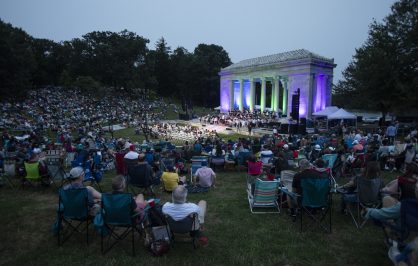
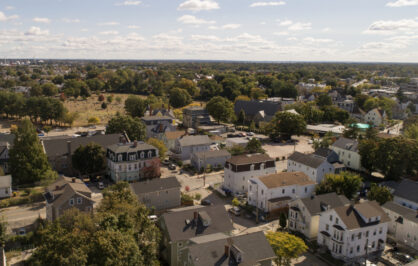
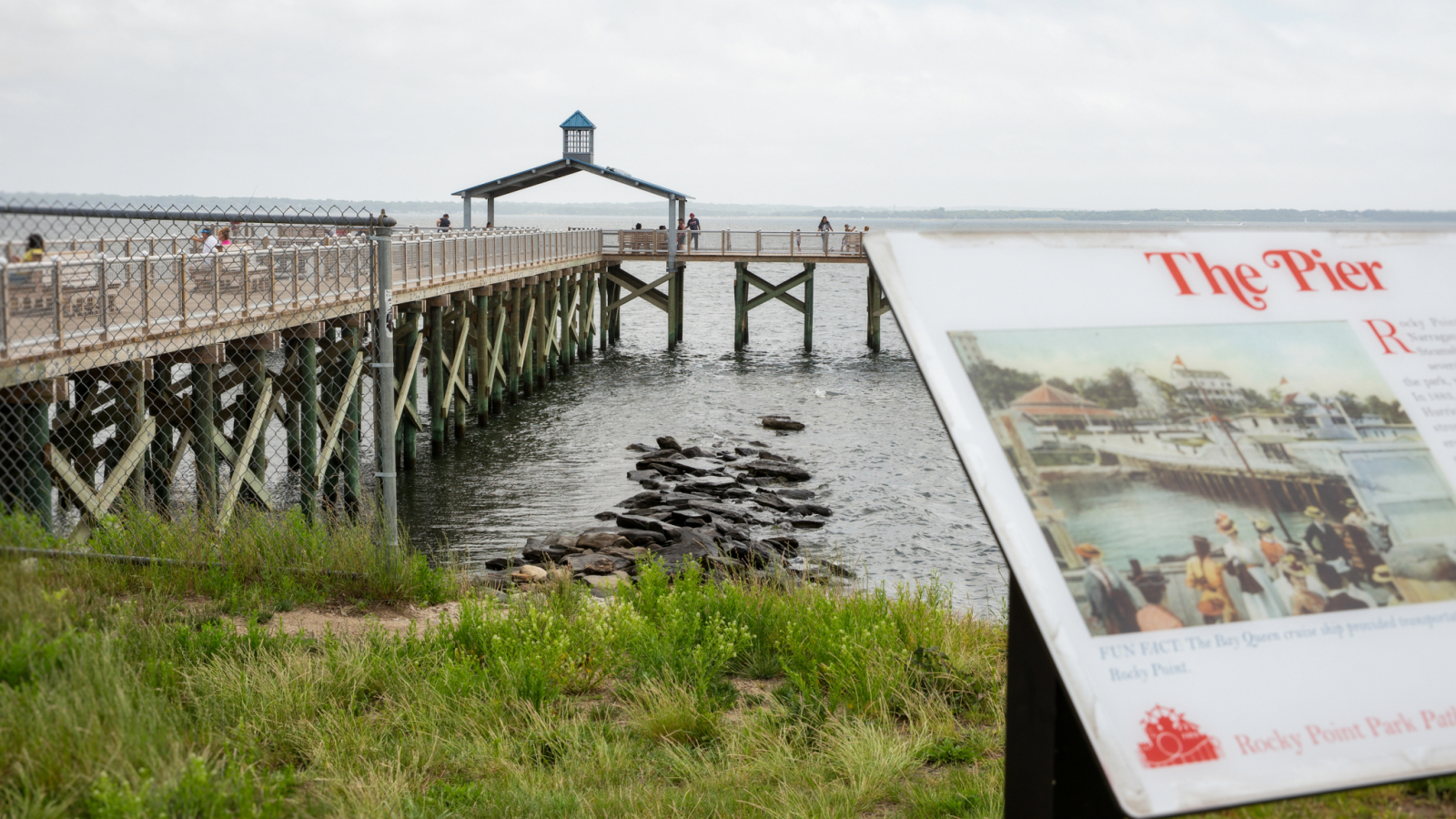
Rhode Island’s changing climate is reshaping the place its residents call home. Its coastline and urban neighborhoods face rising exposure to flooding and heat, while its homeowners insurance market falls into crisis. These natural and financial realities were the focus of a recent Rhode Island Foundation convening, “Resilience and Risk: Rhode Island’s Climate Future.”
“The risk is real,” confirmed David Cicilline, the Foundation’s president and CEO. “Rhode Island is a small state with an enormous coastline, aging infrastructure, and communities that have long shouldered more than their share of environmental burdens. We are seeing the effects of climate change not as a distant threat, but as a present reality in our weather patterns, in our ecosystems, and in the cost of protecting our homes.”
The gathering brought together donors, nonprofit partners, policymakers, and industry leaders for two conversations: one on community-led resilience work supported through the Foundation’s Climate Action and Sustainability priority, and another on one of the most urgent issues facing the state today: the rising cost and shrinking availability of homeowners insurance in coastal communities.
“The risk is real. Rhode Island is a small state with an enormous coastline, aging infrastructure, and communities that have long shouldered more than their share of environmental burdens. We are seeing the effects of climate change not as a distant threat, but as a present reality in our weather patterns, in our ecosystems, and in the cost of protecting our homes."
- David N. Cicilline, President and CEO, Rhode Island Foundation
The first panel discussion was moderated by Jennifer Pereira, the Foundation’s Vice President of Grants and Community Investments & Director of Climate Action and Sustainability, and included grantee partners Casey Tremper of Rhode Island Sea Grant and Alicia Lehrer of the Woonasquatucket River Watershed Council. Pereira framed the Foundation’s climate work around three essential pillars: grantmaking that supports organizations doing the work on the ground, investment strategies that align the Foundation’s endowment with its values, and a long-term commitment to systems change.
Offering a closer look at what that grantmaking sustains on the ground, Tremper described the Islands Resilience Cohort, which brings together municipal leaders from Rhode Island’s five inhabited islands to share knowledge on everything from drinking-water infrastructure to flood monitoring. Rhode Island has many small islands in Narragansett Bay, with five that are inhabited year-round: Block Island, Aquidneck Island (Newport, Middletown, and Portsmouth), Conanicut Island (Jamestown), Prudence Island, and Hog Island.
Lehrer spoke about Nuevas Voces, a nine-month climate leadership cohort conducted primarily in Spanish to reach the community's largely Spanish-speaking residents. The program has graduated 175 participants from Providence neighborhoods that are the most vulnerable to flooding and heat. “Our ability to connect them to the nature in their neighborhood was very heartening for them,” Lehrer said, describing how program graduates have become the community’s own climate advocates, now consulted by the city on stormwater and resilience planning. Cohort members have also gone on to participate in Nuestros Bosques, or ‘Our Forests,’ a program where they've planted trees, built a pollinator garden, and created a community garden. Their work also reflects two of the Foundation’s funding focus areas for this priority: strengthening climate resiliency in under-resourced and environmental justice communities and stewarding natural resources and green space.
A second conversation addressed a challenge closely tied to that same resilience work: the state’s growing homeowners insurance crisis. The panel included U.S. Senator Sheldon Whitehouse, who has spent years tracking the link between climate change and insurance markets nationally, and who pointed to Florida, where a wave of insurer exits and unpaid or underpaid claims has already driven down property values, as a warning sign for what could lie ahead for Rhode Island. Rising premiums, non-renewals, and gaps in flood coverage are making it harder for Rhode Islanders to stay in their homes. The burden falls hardest on working-class coastal neighborhoods, affecting housing stability and the ability to build wealth through homeownership.
As Rebekah Wagoner, Associate Counsel at the Rhode Island Association of Realtors, explained, climate resiliency carries real economic and housing consequences alongside environmental concerns. She and fellow panelists Ernie Shaghalian of Butler & Messier Insurance and Dennis Algiere, long-time banker and former state senator, described how insurance costs are increasingly surfacing at the closing table, catching new homeowners off guard, and agreed that education, incentives for protective home upgrades like fortified roofs, and stronger consumer protections all have a role to play in helping Rhode Islanders stay in their homes as risk grows.
While the insurance crisis remains a systemic challenge, the Foundation’s climate grantmaking offers a measure of what coordinated investment can accomplish. In 2025 alone, the Foundation awarded $2.8 million in Climate Action and Sustainability grants to 33 organizations across the state. Those grants reached nearly 50,000 students and young people, protected and managed more than 60,000 acres of land, supported the planting or stewardship of over 4,000 trees, diverted 925 tons of food waste from landfills, and helped avoid or reduce nearly 3,000 metric tons of greenhouse gas emissions.
The conversation is already continuing beyond the convening, including an upcoming Marine Law Symposium at Roger Williams University focused specifically on climate and insurance. The convening didn't resolve Rhode Island's insurance crisis, but it facilitated the awareness, conversation, and collaboration that improving it requires. The Foundation's role is "not to lead from the front with all the answers,” explained Cicilline, “but to be a long-term partner investing in community-based solutions, bringing people to the table, and staying with the work even when it's hard."
And he noted that resilience is real, too: "The most durable change doesn't come from any single grant or initiative. It comes from a sustained commitment, year after year, alongside the people and organizations doing the work."
Read more about the Foundation’s climate action and sustainability impact, including the full grantee list, focus areas, and 2025 outcomes data, in the Climate Action and Sustainability Learning and Impact Brief.
To learn more about this community priority or to support this work, contact Jennifer Pereira, Vice President of Grants & Community Investments, at jpereira@rifoundation.org or 401-427-4052.
Share this article