Media release
Nearly $650,000 in seed funding awarded to boost promising medical research
Grants are largely intended to help emerging researchers advance projects to the point where they can compete for national funding
The Rhode Island Foundation is awarding nearly $650,000 in seed funding to 26 promising medical research projects.
The work ranges from improving patient adherence to GLP-1 based weight loss medications to training AI to accurately diagnose breast cancer. With this round of grants, the Foundation has awarded more than $6.8 million since 1997.
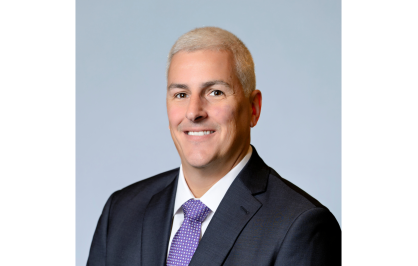
“Through the generosity of our donors, we are able to provide the crucial seed funding that enables local researchers to purse promising medical advances,” said David N. Cicilline, the Foundation’s president and CEO. “Although the grants are fairly modest, they can lead to big discoveries that will spark substantial new investments in the state’s research sector as well as create healthy communities across our state.”
Laboratory, clinical and population-based research was eligible for funding. In addition to general medical research, grants were available to study infectious diseases, cardiac research, coronary artery disease, cerebral accidents, cancer, heart disease, multiple sclerosis, arthritis, diabetes, allergies and performance enhancing substances.
The University of Rhode Island received $25,000 to build an improved AI that helps physicians diagnose breast cancer, specifically by revealing and fixing the hidden flaws in existing AI models.
“AI models are very powerful predictors but are also prone to hidden errors,” said Alina Jade Barnett, assistant professor in the Department of Computer Science and Statistics. “One way we can make these safer is to design AI that can explain its reasoning. If we know how the AI makes its decision, we can see when it's making a mistake. A possible error we might see would be when the AI bases its decision on patient age instead of examining the cancerous tissue.”
"However, knowing the flaws in the AI reasoning is only the first step. In this new project, we're developing ways to correct these errors, a process called ‘model steering.’ The result is a collaborative human-AI partnership that maintains both powerful, data-driven predictions and meaningful human oversight,” she said.
Johnson & Wales University received $24,425 to pilot a diabetes prevention program for Latina adolescents at risk of developing Type 2 diabetes. The project brings together experts from JWU's College of Health & Wellness and College of Food Innovation & Technology, as well as Brown University Health.
The study will explore how well the culturally tailored program works, focusing on how easy it is to run, how engaging it is for participants, and how it can best support healthy outcomes. Participant feedback will guide improvements to ensure the program meets the unique cultural and health needs of this population.
“Latina adolescents experience elevated risk for Type 2 diabetes, yet prevention programs are often not designed with their cultural context in mind,” said Luciana Soares, director of JWU's Master of Science in Clinical Nutrition & Dietetics program. “This study allows us to adapt an evidence-based intervention in a way that is both meaningful and effective."
By assessing how participants engage with and respond to the adapted program, the research team aims to generate insights that can guide future large-scale implementations.
"This vital research will help support Johnson & Wales University's whole-body, prevention-centered approach to dietetics and wellness by bringing together interdisciplinary expertise," said College of Health & Wellness Dean Maura Daly Iversen. "The insights gained will help shape how culturally responsive prevention efforts can be implemented and expanded in meaningful ways."
Miriam Hospital received $25,000 to study ways to better support adults who use GLP-1 based weight loss medications by identifying challenges patients experience when they use these medications and by developing strategies to address them. Estimates are that between 50-70% of patients stop GLP-1 treatment within one year. Existing studies identify barriers such as loss of insurance coverage, high cost, gastrointestinal side effects, injection burden and lack of weight loss.
“GLP-1-based agonist medications produce major weight loss and improve metabolic and heart health. Our study will interview adults who have used these medications to learn more about their experiences and any challenges they faced, so we can identify ways to improve people’s experiences using GLP-1s,” said Emily Panza, a research scientist at Miriam.
The qualitative study will look at multi-level determinants of GLP-1 adherence and persistence in adults with obesity, with and without type 2 diabetes. Twenty-five adults who have used GLP-1-based medications within the past year will complete one-time, 60- to 90-minute virtual interviews exploring how factors such as side effects, provider communication, social stigma and cost impacted their experiences using the medication.
“Our findings will help us design patient education, provider communication and health system interventions to address these challenges and to improve the support that patients get when they start GLP-1-based medications. This preliminary data will support future research aimed at optimizing obesity pharmacotherapy outcomes,” said Panza.
The remaining grants and projects are:
- Brown University received $25,000 for “Mechanisms of DNA Damage by the Human LINE-1 ORF2p Endonuclease,” led by Martin Taylor, assistant professor of pathology and laboratory medicine at the Warren Alpert Medical School.
- Miriam Hospital received $25,000 for “Beyond Metabolism: Defining the Immunomodulatory Effects of GLP-1 Receptor Agonists,” led by Dr. Vanessa Van Doren, assistant professor of medicine at the Warren Alpert Medical School at Brown University.
- Miriam Hospital received $25,000 for “Neighbors in Care: Improving Infectious Disease and Substance Use Services in Rhode Island,” led by Mary Figgatt, who is a postdoctoral fellow.
- Providence College received $23,242 for “From Molecules to Motivation: PTEN Signaling in Neural Circuits of Feeding and Threat Avoidance,” led by Ileana Soto-Reyes, assistant professor of neuroscience.
- Rhode Island Hospital received $25,000 for “Adapting a Transitional HIV Treatment Support Model for Persons Leaving Incarceration in Uganda,” led by Joseph G. Rosen, a research scientist in the Division of General Internal Medicine.
- Rhode Island Hospital received $25,000 for “Emergency Medicine Education for Residents to Improve Genital Exam Knowledge and Competency,” led by Dr. Stephanie Ruest, a physician researcher.
- Rhode Island Hospital received $25,000 for “Investigating the Tumor Microenvironment and Chi3L1 Inhibition in Primary and Recurrent Chordoma,” led by Dr. Patricia Sullivan, assistant professor at The Warren Alpert Medical School at Brown University.
- Rhode Island Hospital received $25,000 for “Multimodal AI for Early Detection and Prognosis in Heart Failure,” led by Melih Agraz, assistant professor of medicine at Brown Health.
- Rhode Island Hospital received $25,000 for “Novel Multiplex Cytokine Assay for Rapid Prediction of CAR-T Therapy Toxicities,” led by Dr. Ari Pelcovits, medical director of the CAR T-cell program.
- Rhode Island Hospital received $25,000 for “PENS-P: Peroneal Electrical Nerve Stimulation in Pregnancy for Restless Legs Syndrome,” led by Vesna Buntak, assistant professor in pulmonary, critical care and sleep medicine at The Warren Alpert Medical School at Brown University.
- The University of Rhode Island received $25,000 for “Microbiome editing to reduce bacterial virulence,” led by Amanda Alker, assistant professor of pharmacy.
- The University of Rhode Island received $25,000 for “Piloting a Positive Affect Intervention to Improve Family Mental Health Outcomes,” led by April Highlander, assistant professor of psychology.
- The University of Rhode Island received $25,000 for “Discovering New Antibiotics from Marine Mollusk Symbionts,” led by Bailey W. Miller, assistant professor of pharmacy.
- The University of Rhode Island received $25,000 for “Pilot Study of Maternal and Partner Postpartum Mental Health Trajectories,” led by Jamie Blalock, assistant professor of human development and family science.
- The University of Rhode Island received $25,000 for “Pharmacist-supported efforts to improve medication outcomes and healthcare access,” led by Joseph Nardolillo, clinical assistant professor; pharmacy practice.
- The University of Rhode Island received $25,000 for “Clostridium novyi-NonToxic as an Intravenous Pancreatic Cancer Therapeutic,” led by Kaitlin Dailey, assistant professor of biomedical and pharmaceutical sciences.
- The University of Rhode Island received $25,000 for “TMS as a Novel Treatment for Adolescents with Persistent Post-concussion Symptoms,” led by Nathan Cook, assistant professor of psychology.
- The University of Rhode Island received $25,000 for “Towards AI-Enhanced Multimodal BCIs with EEG and Behavior” led by Rahul Singh, assistant professor of electrical, computer and biomedical engineering.
- The University of Rhode Island received $25,000 for “A Browser-Based Eye Tracking & Pupilometry Research Platform,” led by Shaun Wallace, assistant professor of computer science and statistics.
- The University of Rhode Island received $25,000 for “Enhancing Self-amplifying RNA Vaccines using Immune Adjuvants,” led by Ting-Yu Shih, assistant professor of chemical, biomolecular and materials engineering.
- The University of Rhode Island received $25,000 for “SNAP Work Requirement, SNAP Participation, Healthfulness of Food Purchases,” led by Wenhui Feng, assistant professor of public health.
- The University of Rhode Island received $25,000 for “Adjuvantation of personalized cancer mRNA vaccine for better therapeutic efficacy,” led by Xinyuan Chen, assistant professor of biomedical and pharmaceutical sciences.
- The University of Rhode Island received $25,000 for “Spin Control via Proton Tunneling in Photosensitizers for Photodynamic Therapy,” led by Zhen Tao, assistant professor of chemistry.
A panel made up of scientists and physicians helped the Foundation evaluate the proposals.
The funding came through the following 25 endowments: Alice Newton Fund, Alice W. Bliss Memorial Fund, Anne Elizabeth Chase Fund, Charles Goss Memorial Fund, Charles V. Chapin Fellowship Fund, Colonel Lee Walton and Xenia Roberts Memorial Fund, Dorothy Hackney Smith Fund, Edythe K. & Jane E. Richmond Memorial Cancer Fund, Esther S. Phillips Fund, Eva and Boris Frankfurt Fund, Foundation for Health, Frieda Dengal Fund, Gilbert J. Clappin, Jr. Memorial Fund, Haire Family Fund, Healing Ribbons Fund, Helen Walker Raleigh Vision Fund, Herbert E. Hopkins Fund, John O. Strom, MD Memorial Fund, Marquise d'Andigne Fund, Mary A. Young Cancer Fund, Phebe Parker Fund, Richard N. and Beverly E. Carr Fund, Rosalyn R. Reynolds Fund, Samuel J. and Esther Chester Medical Research Fund and Viriato H.D. Evora Jr. Fund.
The Rhode Island Foundation is the largest and most comprehensive funder of nonprofit organizations in Rhode Island. Through civic leadership, fundraising and grantmaking activities, together with neighbors and partners, the Foundation is helping to create progress that lasts.
Share this article